A wo-man

Saying that language shapes us as much as we shape it at this point has become a mere truism; yet, there are moments when I become aware of this anew—just as I have now, upon beginning to read the English translation of Simone de Beauvoir’s Le Deuxième Sexe, a process that inevitably involves also stepping outside the confines of my own native language (which is yet another benefit of emigration).

I had never thought deeply about the words ‘mężczyzna’ (a man, an adult male) and ‘kobieta’ (a woman, an adult female) before, and the fact that—unlike their English counterparts—they are clearly distinct from one another never really registered since they are simply a natural part of my native language, just like any other element of it, and I use them as instinctively as I breathe or walk. Reading de Beauvoir, however, made me realise that the situation is different when it comes to the English terms ‘man’ and ‘woman’—the latter sounds almost like a subspecies of the former, and on top of that, ‘man’ also means a human, a person regardless of gender or sex, usually an adult, which, by the way, was not always the case: etymologically, the word ‘woman’ derives from the Old English ‘wīfmann’, which essentially meant ‘female person’, and the term ‘mann’ referred primarily to a person or human being (mankind), although it could also, on occasion, denote an adult male; the word ‘wer’ was used more specifically for a man.

De Beauvoir’s own native French is less revealing of this particular linguistic bias than English. The word ‘homme’ means a man but also a human being (as in les droits de l’homme, traditionally ‘human’, although ‘être humain’ is another expression for a human being), and ‘femme’ denotes a woman. Still, they don’t share the same twisted relationship as their English counterparts.

But in the end, the Polish and French societies have been just as patriarchal as English society, so the truism may not withstand scrutiny, after all.


More words to ponder at maciejmodzelewski.com

Free sake for now

I wonder if the magpies building a nest in the tree outside my window
would care about Lenin’s invention,

or if the seagulls crying on the roof of the church across the street
would be fond of hashtagging their vaginas,

because if I were a woman,
I would probably feel offended today;

but since I’m not, I’d rather wait a few days
for free sake and a glorious view of youbutsu.

Perhaps one day we’ll finally find peace
beyond our genitals.

Journal (Till hell freezes over)

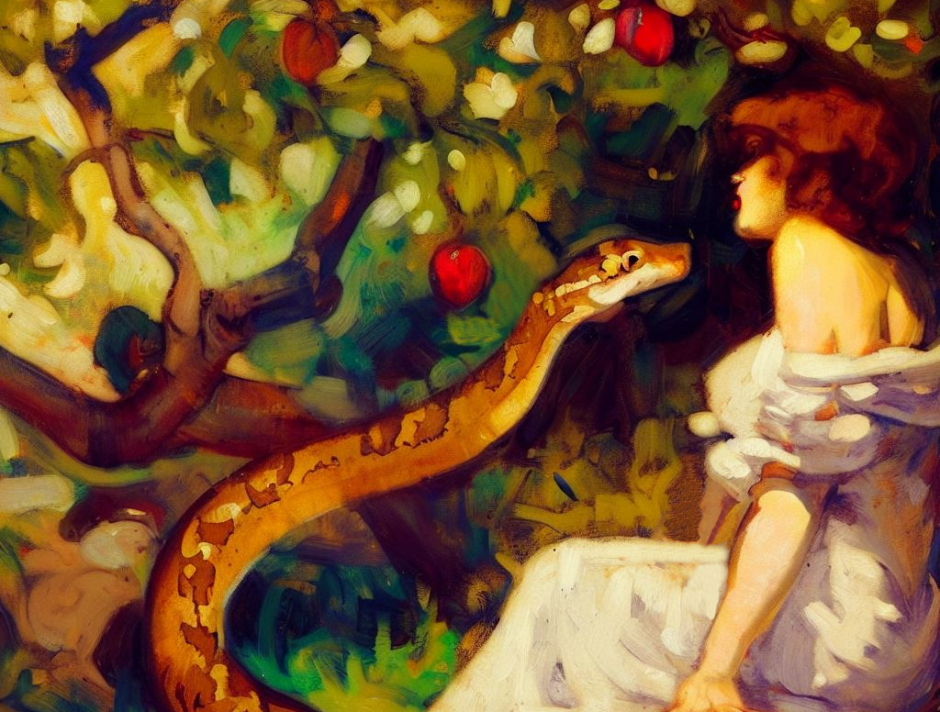
As I said earlier, what a disappointment it must have been to discover that someone else, that is, a woman, had suddenly appeared in the Garden of Eden. But I guess disappointment would be an understatement, to say the least. It probably looked more like a panic attack, triggering a state of emergency that has continued ever since. This required a solution, something fundamental that would safeguard the man’s position till hell freezes over—and hell it was; as once used, it quickly proved to be the best shackles and gag. And it doesn’t matter whether you call her Pandora, Eve, or Mary—no, not that one but Ms Wollstonecraft—your accusing finger says it all.

The queen is naked

Maybe it is a matter of one’s inner voice being inaccessible to others (perhaps being a man makes me deaf to it), or maybe it’s like those deeply personal rituals that, seen from outside, seem absurd, ridiculous even, but I’m two-thirds through “The Vagina Monologues,” and apart from a very few exceptions, I can’t muster anything more than a shrug.

I really started to wonder where all this hype came from when the book was first published. I guess the real novelty was the title itself—controversial and headline-making. I’ve also never seen Eve Ensler on stage, and I could imagine her performance being crucial to the reception of this text. But beyond that, I can’t help but exclaim that the king (queen, actually) is naked. There are no secrets unravelled, no divine revelations about women. The whole book doesn’t even look like coherent narration. Reading it feels more like going through someone’s random notes on roughly the same topic in a notebook you found left by accident on a bus seat.

I am sure that this book will go down in the annals of history, but more because of what happened around it than because of the text itself. But it won’t be a whole chapter; more like a two-sentence mention, a short paragraph at most. And I don’t say this out of malice. This text simply doesn’t have enough weight to deserve more. If I’m in the mood for real heavyweight feminist writing, all I have to do is reach for something by Germaine Greer or Susan Faludi from my bookshelf.

As a side note, I will mention that after I finished Gloria Steinem’s foreword to “The Vagina Monologues” and the introduction by the author herself, the idea of my own monologues came to me. You can find them in the following texts: