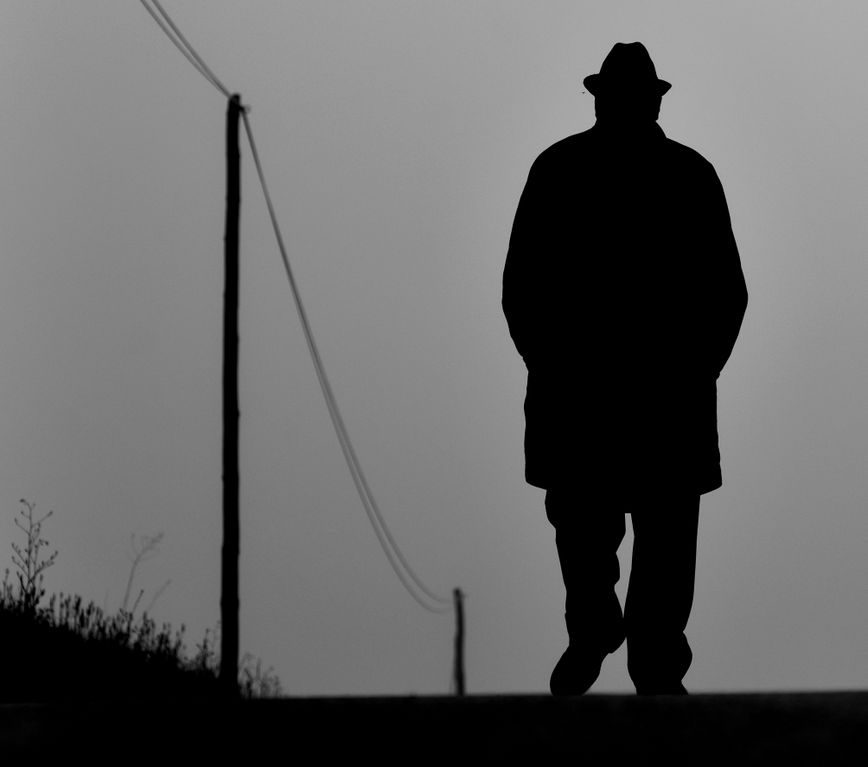
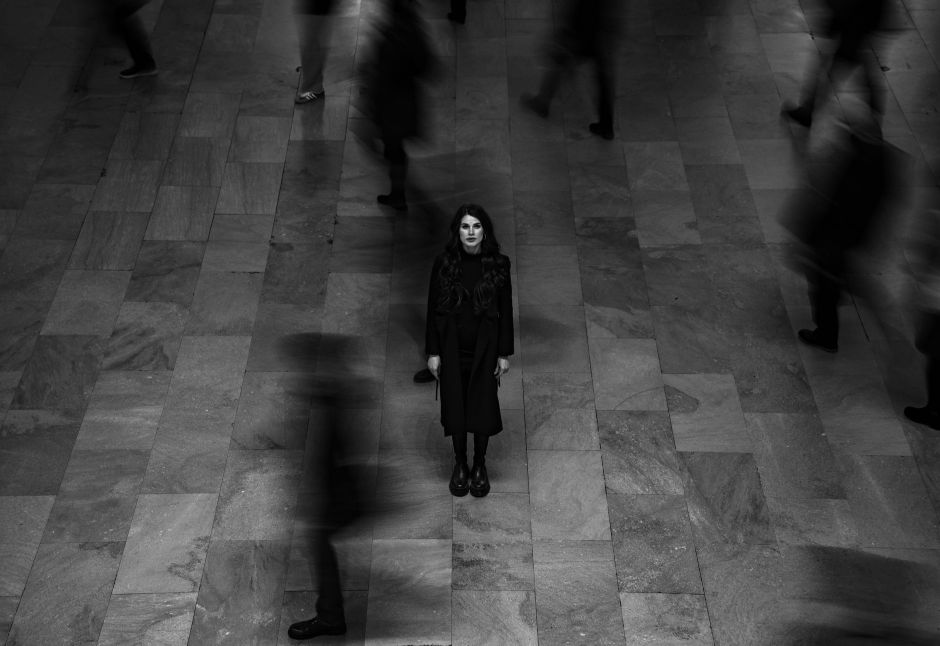
Constipation

I am the body
of my thoughts—
unsolicited and needless,
like a colonoscopy
on a cadaver—barely settled
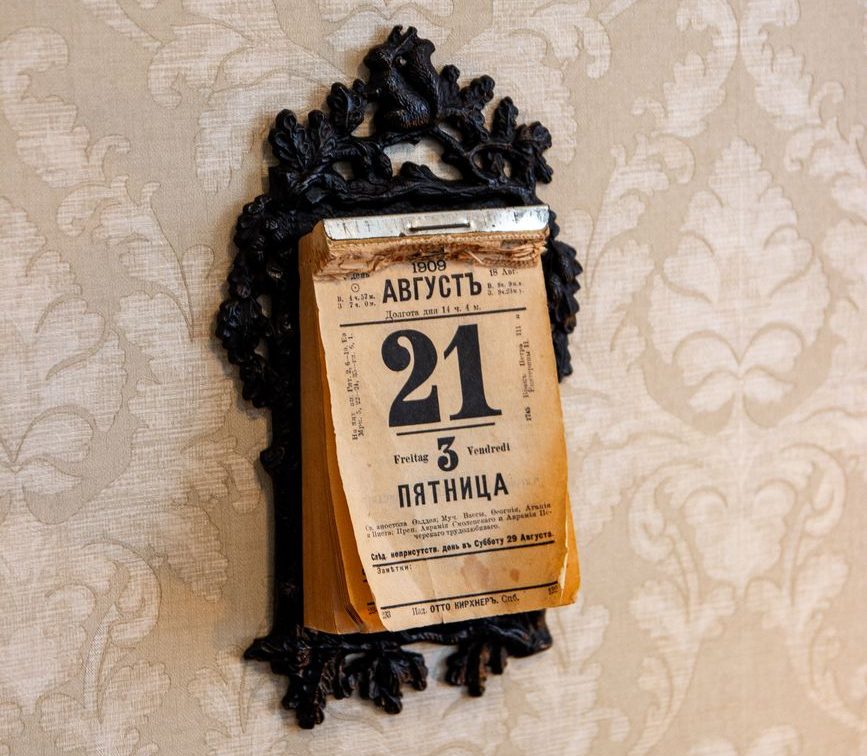
into the habit of tearing away
a calendar leaf
and vacillating
between Die Blendung
and I Lick My Cheese,
just to spend early morning
engrossed in speculations
about the importance of a saucer
for a brimful demitasse
of kopi luwak.


More words to ponder at maciejmodzelewski.com

Zero

The more you give up, the easier life becomes.
I read that in a webtoon—a daily dose of thaumatin
to alleviate the debt incurred by reading dead men,
trespassing days to spend the midnight with Etta James
and that one question of yours hanging in the air,
‘What I’m after?’.

It took a good deal of effort to get situated
and stop celebrating arbitrary dates,
and now only the blood-stained tissues piling up in the bin
remind me of the passage of time, so I hope—
though not without the fear of contradiction—
for nothing,

nil,

naught.


More words to ponder at maciejmodzelewski.com

A wo-man

Saying that language shapes us as much as we shape it at this point has become a mere truism; yet, there are moments when I become aware of this anew—just as I have now, upon beginning to read the English translation of Simone de Beauvoir’s Le Deuxième Sexe, a process that inevitably involves also stepping outside the confines of my own native language (which is yet another benefit of emigration).

I had never thought deeply about the words ‘mężczyzna’ (a man, an adult male) and ‘kobieta’ (a woman, an adult female) before, and the fact that—unlike their English counterparts—they are clearly distinct from one another never really registered since they are simply a natural part of my native language, just like any other element of it, and I use them as instinctively as I breathe or walk. Reading de Beauvoir, however, made me realise that the situation is different when it comes to the English terms ‘man’ and ‘woman’—the latter sounds almost like a subspecies of the former, and on top of that, ‘man’ also means a human, a person regardless of gender or sex, usually an adult, which, by the way, was not always the case: etymologically, the word ‘woman’ derives from the Old English ‘wīfmann’, which essentially meant ‘female person’, and the term ‘mann’ referred primarily to a person or human being (mankind), although it could also, on occasion, denote an adult male; the word ‘wer’ was used more specifically for a man.

De Beauvoir’s own native French is less revealing of this particular linguistic bias than English. The word ‘homme’ means a man but also a human being (as in les droits de l’homme, traditionally ‘human’, although ‘être humain’ is another expression for a human being), and ‘femme’ denotes a woman. Still, they don’t share the same twisted relationship as their English counterparts.

But in the end, the Polish and French societies have been just as patriarchal as English society, so the truism may not withstand scrutiny, after all.


More words to ponder at maciejmodzelewski.com

Convenience

Is it a matter of convenience
that I’d rather watch Finney in The Dresser
than visit His Majesty’s Theatre?
To tell the truth, the last time I saw the stage
was in my teens, and even then not in earnest—
just another item on the itinerary
of a school trip to the capital.

Is it a matter of convenience
that I take the evening stroll on a treadmill in my study
instead of in Duthie Park?
After all, it’s only a mile from home,
and I’ve long since learnt that the weather is of no consequence—
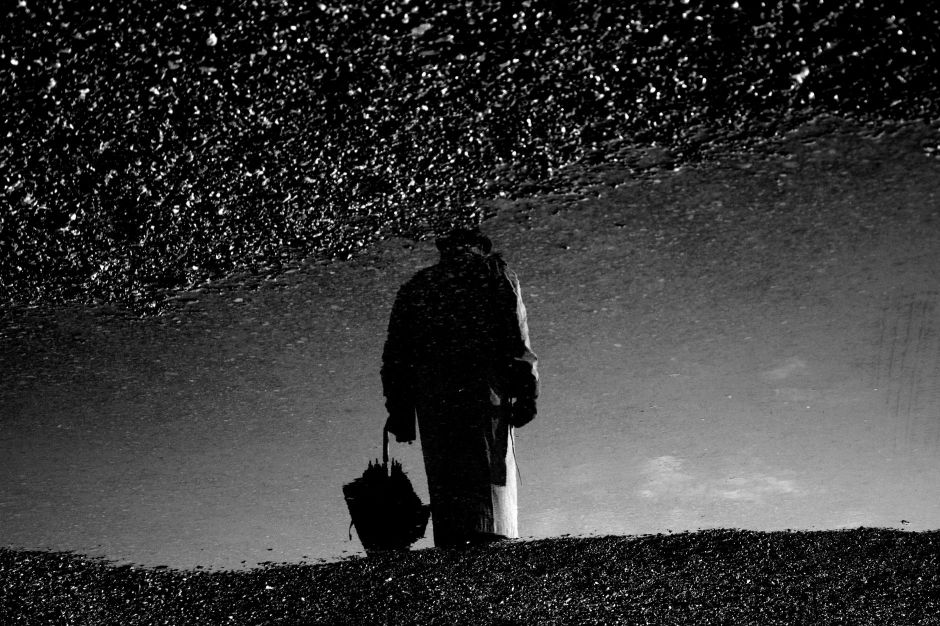
a mackintosh and a pair of wellies do the job,
not to mention an umbrella.

Is it a matter of convenience
that I chose growing into an urban hermit
over daring another Minute of Agreement?
Just weighing any streaming service subscription
against a solicitor’s fees—let alone sleepless nights
and your ruined liver—sounds quite convincing;
unless it’s a pretence.


More words to ponder at maciejmodzelewski.com
Washing-up

I don’t wash the dishes every day—
one might call it an old bachelor’s privilege;

after all, it’s a waste to boil a kettle for a single
spoon, knife, fork, glass, bowl, and plate—

a peculiar family of six enduring the extended stay
in the washing-up bowl as yet another exercise

in ‘back-on-the-market’ frugality.


More words to ponder at maciejmodzelewski.com

Passenger

I happened to myself
along with ‘your welcome,
my pleasure’—
my only invention—
and all the favourite English words,
like ‘certainly’, ‘perhaps’ and ‘indeed’,
etched into the dust
on the shelves in my study
after all the mature
and not-so-mature women—
for lack of male figures—
like a wah-wah mute
giving me vocal inflection
and a sudden urge to catch a ferry to Bergen
for an obol.


More words to ponder at maciejmodzelewski.com

Predicaments

My bellybutton is a hole,
which seems rather fitting
for a frugal existence—
the kind of life where living is optional—
marked by the predicament of becoming
on time, early in the morning,
when I still can’t decide
whom to blame for my falling
asleep after a paragraph of Arendt.


More words to ponder at maciejmodzelewski.com
Open book

After the storm, to find a shelter
amongst the restless natives
of l’esprit de l’escalier,
to put on a brave face
while running laps on a treadmill,
to stay preoccupied
with mingling,
to leave unpaid debts
so as to be remembered
as a fine fellow, courtesy of none…

It’s time to age, I presume,
even if I can’t always be salient—
I am not Lear or Godot,
not even Gantenbein—
and I’m no longer read as much.


More words to ponder at maciejmodzelewski.com

Washed-up romantic

I have never imagined playing Fantasie in F Minor
two-handed—and piano four-hands has kept a legion
of poets, writers, and artists (let alone solicitors)
well-fed—but I now know that whether I read
The Unbearable Lightness of Being or Season of Passion,
or De Divortio for that matter, the time passes still,
even if I can’t sleep a whole night and being called
‘homo sapiens’ triggers impostor syndrome.

At least writing in English suits me,
and I might be forgiven for abandoning my mother
tongue at the end of this writer’s retreat—
it costs nothing but an obol.


More words to ponder at maciejmodzelewski.com