Everyone has a need to matter, even if only for a little while,
and sometimes we can be oddly specific,
like when you mentioned a certain Morris Minor
parked on the corner of King Street and Merkland Road
while asking if I would look at you again in the morning.
Then you turned off the bedside lamp, so I couldn’t see you
wondering if this would sound different in French or Pirahã.
I guess melancholia is the word, but only if neither of us
is bold enough to point out the fact that we are both twisting
the meaning of repentance. Perhaps it’s not so much regret
for what we’ve done, or even fear of what might happen to us
because of it, as an attempt to feel something, anything
—anything at all.
Tag: love
Journal (I’m a city dweller)
I watched Jenny’s Wedding today. Nothing special, really. Apart from the fact that it’s about a lesbian couple, it’s just another romcom spiced with a pinch of light drama. But there was one thing there that made me think. The protagonist’s sister, played by Grace Gummer, realises that the grass in front of her house is always dead, and then she has an epiphany: “Happy people do not have dead grass.” It ends badly for her husband (not that I pity him—he was rather obnoxious). The problem is that I hate grass. Not in general, as there is nothing more pleasant than a stroll on the meadow in summer, but the lawn in front of the house is the essence of artificiality. I hate Saturday gymnastics with a lawnmower and the endless fight with moss and so-called weeds. When I lived in a house with a lawn, I envied my neighbour’s elegantly tiled front yard. But does this make me a bad person, a social outcast, or a less desirable life partner? I’m a city dweller, that’s all. Suburbs are not for me.
Journal (Conversations with Other Women)
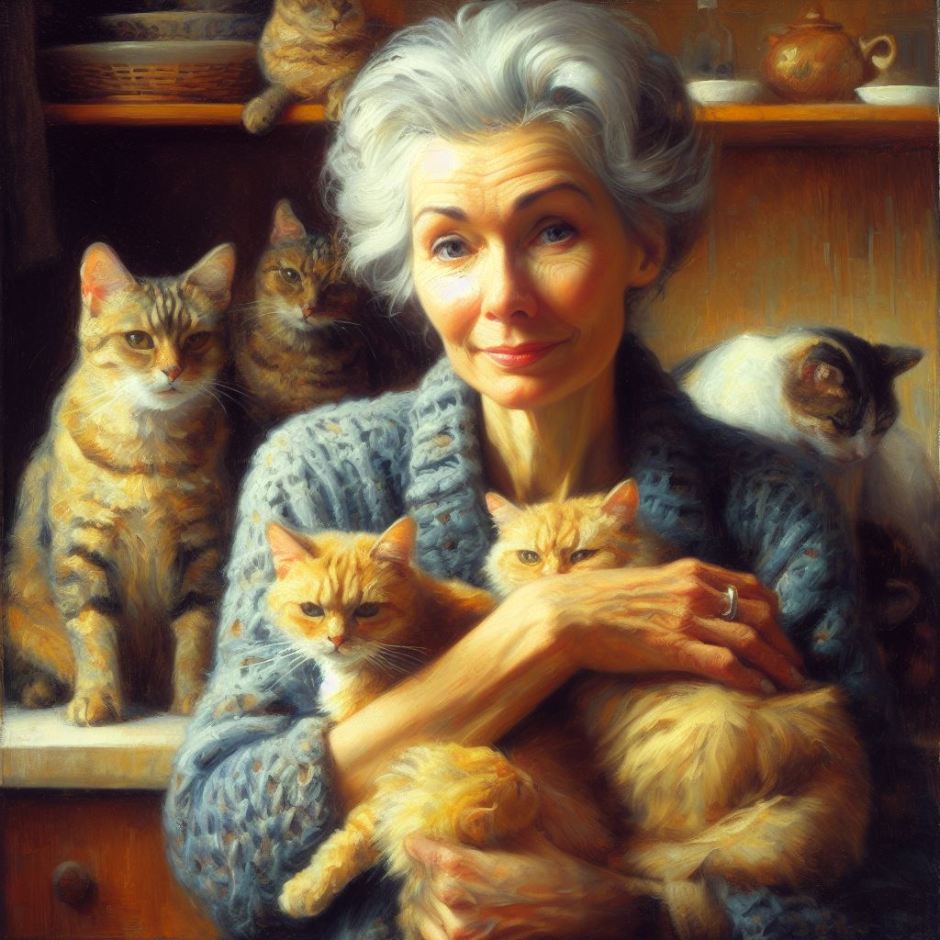
I adore Helena Bonham Carter, but for whatever reason, any time I see her, I picture a crazy cat lady. But this aside, I just watched Conversations with Other Women, and there is a one-liner there that I just love. It goes like this: a woman played by Bonham Carter says, “You’re just a dirty old pervert,” to which a man played by Aaron Eckhart replies, “Yes, I am. But I’m your dirty old pervert.” If only I had a chance to say something like that.
Journal (One never learns)
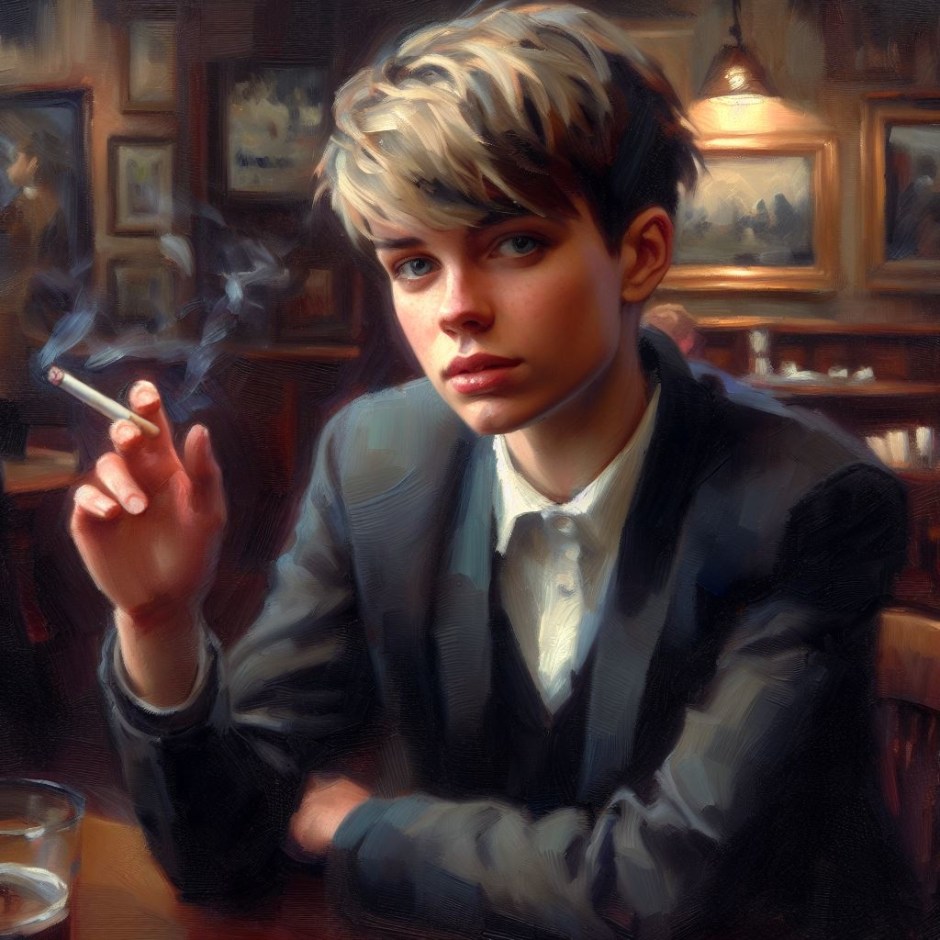
I hate smoking; I really do. For example, even the most beautiful woman, who normally would attract me immensely, the moment she reaches for a cigarette, I’m done with her. I will see her as a monster. And yet there was one time in my life when I was infatuated with such a woman, and her smoking, the way she did it, was something that added to her sex appeal. She was a friend of a friend, a bit of a tomboy, with her close-cropped blonde hair, tight jeans, an oversized men’s sweater with rolled-up sleeves, and a tough-guy attitude. I couldn’t take my eyes off her. We had both just turned eighteen and met in a pub, and I knew straight away she was not interested in me, not one iota. She was just being polite, and after that evening, I never met her again. Now, I don’t even remember her name.
Perhaps if I had met her under different circumstances later in life; or maybe my perception was distorted, like in the case of my friend, who one day admitted that she had been madly in love with me for a very long time—I just didn’t see it while chasing big-breasted bimbos. I never understood why she told me so many years later, when she was about to marry someone else. It was like a goodbye kiss, except without a real kiss. How stupid I was in my youth. Now I know that this was the first time I missed a chance at happiness because of my obsession with large breasts. I guess one never learns. At least I didn’t, and now it doesn’t matter anymore.
Journal (The narrows of the river)
If the soul were made of Jingdezhen porcelain, would life taste like a sip of yùjiāng when we sang wildly, waiting for the moon, and no longer cared when the tune was done? But you never answered; only your eyes asked: How could I ever forget the narrows of the river?
Journal (No such thing as a free drink)
Falling in love is like a shot on the house in a dubious establishment—free and intoxicating but not without its unpleasant consequences the next morning. The barman is a professional who knows what he is doing, as there is no such thing as a free drink—it’s a trap to make you crave some more, where every next jigger costs you double. At the end, you wake up in a dodgy apartment, laying on the floor in your own spew, or worse—on the street. The irony is that you despise it and promise yourself never again, only to end up in the same bar the very next evening, asking for another round. Lucky few who have never fallen victim to this addiction.
Journal (The itchy scar)
It’s puzzling how easily “I do” becomes past imperfect tense, and despite all the anger, regret, or whatever other feeling prevails, you have to let it go. And you do. Eventually. After all, it is not without reason that they say time heals wounds. But the itchy scar will remain for life. And like the good grammarian you are, you will continue to look for syntactic sugar to alleviate the bitterness of that new cup of tea you have managed to brew, hoping that someone will be tempted to join you at five with a platter of madeleines and one day help you scratch that itch.
Journal (Love is blind)
Montaigne said that “in all republics, a good share of the government has ever been referred to chance. Plato, in the civil regimen that he models according to his own fancy, leaves to it the decision of several things of very great importance, and will, amongst other things, that marriages should be appointed by lot;” (Montaigne, 2004).
Let’s think about that last part for a moment. Apart from the fact that these were supposed to be temporary marriages made at festivals to orchestrate eugenic breeding (Brake, 2021), the whole idea is not without some merit. Our Western culture embraces the idea of marriage for love, but keeping in mind that there is a good chance that it ends in divorce or makes couples unhappy over time (DePaulo, 2013), I’m not convinced that it actually works very well. There is a saying in my native language that perfectly fits that hunch: love is blind, and marriage is the best ophthalmologist.
So why not leave the whole affair in the hands of fate for a change? Who knows, maybe we’ll have better luck in this case than with choices made under the influence of the hormonal storm in our brains. Of course, I realise that this is not actually feasible outside of a thought experiment, and I can see many things that could and most likely would go wrong—I’m not that naive—but I also have a feeling that there is a chance for something good in this as well. Besides, we already use dating app algorithms for matching, so is this really that much of a difference?
Because what is the alternative? Suffer in silence with this stranger whom we call our spouse out of habit, or finally come to terms with the idea that marriage is only a temporary matter and establish this state of affairs legally by creating fixed-term marriage contracts, for example, for a decade, with the possibility of extending them for another period if both parties wish so.
References:
Brake, Elizabeth, “Marriage and Domestic Partnership”, The Stanford Encyclopedia of Philosophy (Fall 2021 Edition), Edward N. Zalta (ed.), https://plato.stanford.edu/archives/fall2021/entries/marriage/
DePaulo, Bella, “Marriage and Happiness: 18 Long-Term Studies”, Psychology Today (15 May 2013), https://www.psychologytoday.com/us/blog/living-single/201303/marriage-and-happiness-18-long-term-studies
Montaigne, Michel de, “Essays of Michel de Montaigne—Complete”, Project Gutenberg (2004), W.C. Hazlitt (ed.), C. Cotton (transl.), https://gutenberg.org/files/3600/3600-h/3600-h.htm
Rhymester, read thyself
“You have lost your wits and have gone astray; and, like an unskilled doctor, fallen ill, you lose heart and cannot discover by which remedies to cure your own disease.”
Aeschylus, Prometheus Bound
With mobile phones, we have become accustomed to immediate responses,
so no one wants to wait for anything anymore. Add to that the quality
of our relationships—likely comparable to the nutritional value
of a plastic bowl of instant noodles—and it’s no wonder we are trapped
between the Scylla of solitude and the Charybdis of addiction to dating apps,
ending up lonely one way or another.
Dealing with people sooner or later brings disappointment. I get that.
But we all have our quirks and neglected issues, so maybe it’s time
to stop being harder on others than on yourself.
Give them a chance, and they may pleasantly surprise you,
said the one least likely to read his own words.