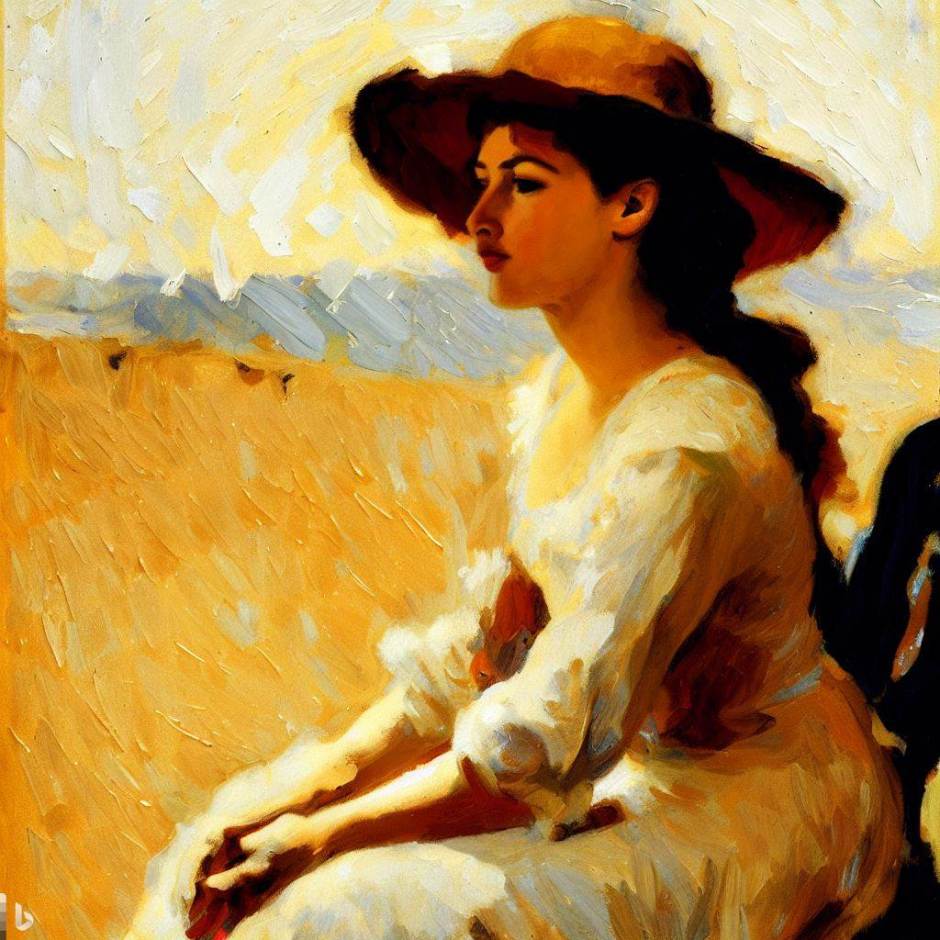
吾が舞へば、麗し女、酔ひにけり(あがまへば、くはしめ、ゑひにけり)
吾が舞へば、照る月、響むなり(あがまへば、てるつき、とよむなり)
結婚に、神、天下りて(よばひに、かみ、あまくだりて)
夜は明け、鵺鳥、鳴く(よはあけ、ぬへどり、なく)
遠神恵賜(とほ、かみ、ゑみ、ため)
Because I had danced, the beautiful lady was enchanted
Because I had danced, the shining moon echoed
Proposing marriage, the god shall descend
The night clears away and the chimera bird (white’s thrush) will sing
The distant god may give us the precious blessing!
Japanese pre-feudal-era wedding song
When, at midnight, he sings with a longing voice,
“A ga maeba, kuwashime yoinikeri,”
the wind pushes him towards his desire.
When, at midnight, he sings with a longing voice,
“A ga maeba, terutsuki toyomunari,”
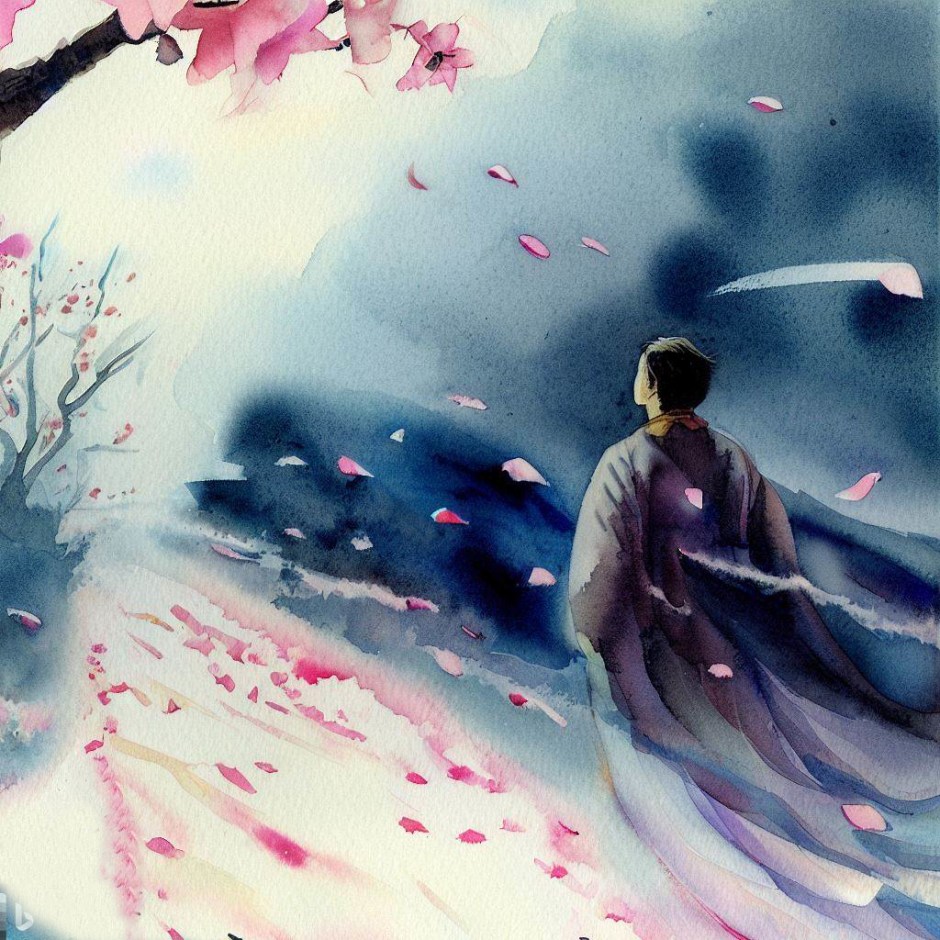
cherry blossom petals show him the way.
When, at midnight, he sings with a longing voice,
“Yobai ni, kami amakudarite, yo wa ake, nuedori naku,”
a dropped feather caresses his flushed cheek,
and their hands, at the first touch, yearn for more already.
But then the scorching sun of the day comes
and turns the petals into dust on the road,
taking away his voice, so he can no longer sing
“Toh kami, emi tame.”

 hidden pilcrow