I bought this fancy camera once, only to lose interest in photography.
Some other time, I spent hours rehearsing small talk and still chose solitude
like every other hermit among the city dwellers. And since I’m bookish,
I knew marginalia were my bread and butter, but one way or another
I had to face the question: Do I lose interest in everyday life?
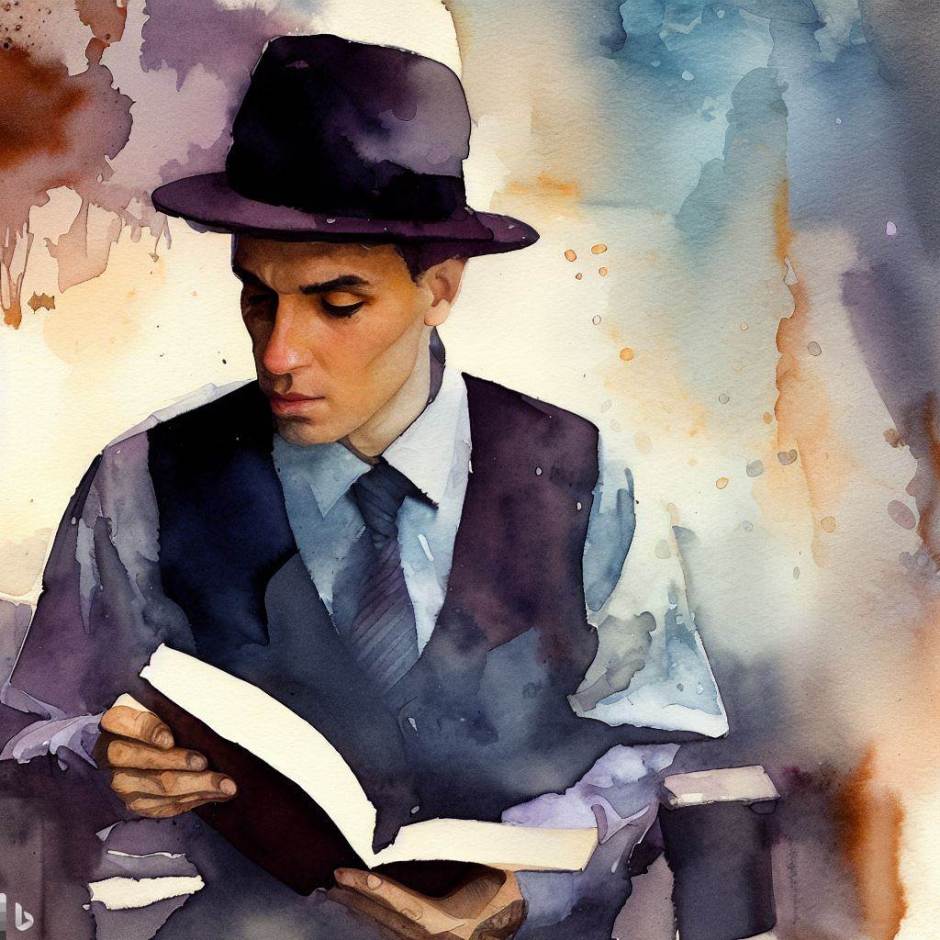
Then again, like a faceless man in a bowler hat, every now and then I think
that I’ve actually caught a glimpse of something—I just don’t know
what exactly it is yet—but it always turns out to be nothing
but my imagination.
Tag: reflections on life
A special day
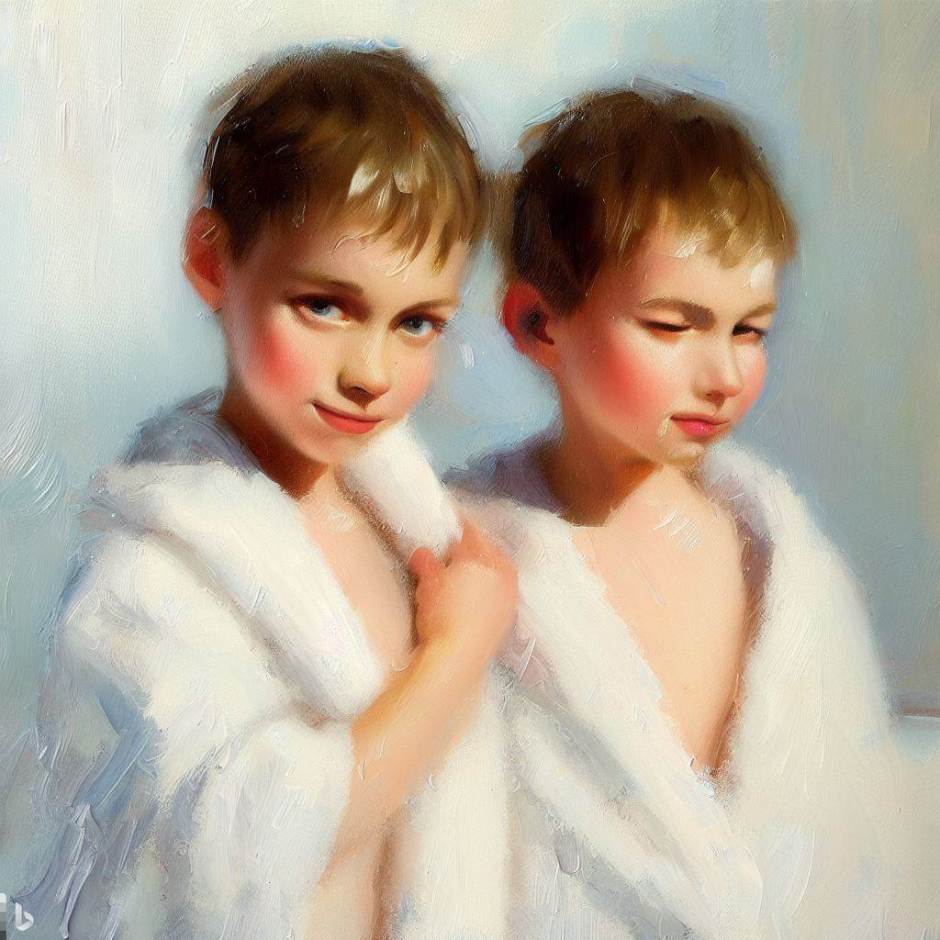
Saturday was a special day—a bath day for Sunday.
We stood by the washtub placed next to the well,
watching our mother pour hot water from the cauldron
and then add cold well water, stirring to obtain the right temperature.
Then she would take each of us in turn and bathe thoroughly
from head to toe with quick moves and without fuss,
dry with a towel, and help get dressed.
I don’t really remember that. It’s just one
of the very few stories from back then that she ever told us.
Saturday was a special day—the day I’d like to believe
we felt like family.
What name do you wear to dinner?
I never liked my name. It sounds wishy-washy, to be honest,
and definitely lacks the solid attitude of Piotr or Janusz.
Even my middle name has more to offer in this regard.
And why do we attach so much importance to the name
in the first place? What’s wrong with changing it like we do
with our hair or clothes? Our bodies, not to mention minds,
also change over time, so why stick with the same name for life?
Maybe tomorrow I will wake up feeling like Aditya or Haruto,
or better yet, Gwendolyn, to express my feminine side.
And why limit ourselves to calendar pages? Don’t we change
out of our morning sweatpants into work clothes, and after
returning home, into something more appropriate for dinner,
finally slipping into our pyjamas at the end of the day?
And if a name is indeed at the core of our personality,
then building it on a foundation that is merely the accidental
whim of our parents on our birthday seems somewhat unwise.
Anyway, right now, I feel like nobody—Mr. Nobody.
In the hour of my death
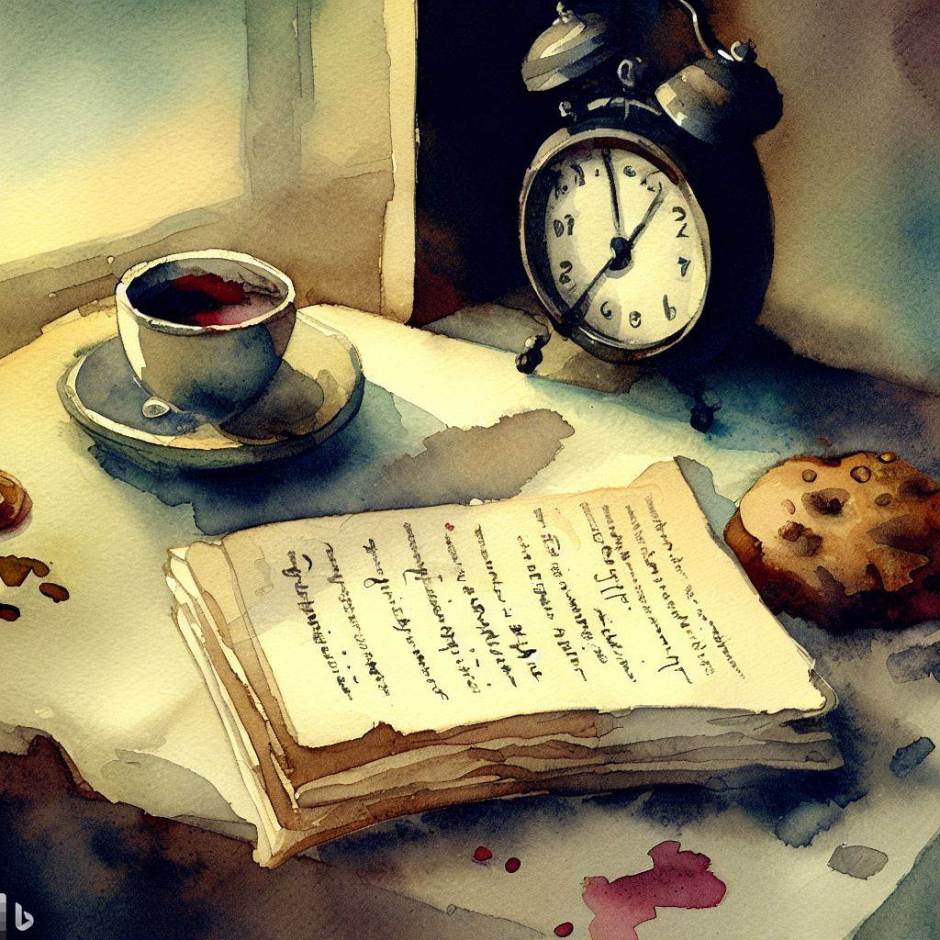
In the hour of my death, I did something insignificant,
as I often would. A book fell to the floor, bending the pages,
which I never liked. A stillborn note cut off mid-sentence
never got a chance to become a stanza. A cup of tea gone cold
and a half-eaten cookie—not even a madeleine—that at best
could remind someone of my cholesterol problems were waiting
to be thrown away. Only the clock, as always, marked the passing
moments with its regular tick-tock. In the hour of my death,
I did something insignificant because, in the end, I was taken
by surprise again.
Imagining nothing
Sometimes I write words. Most of the time, I write
nothing, and I know it’s just the way English grammar works,
but still, that substantiation of nothingness is truly baffling.
And I’m not talking about vacuum, which, by the way,
is no longer equated with nothing in modern science;
not even about être-pour-soi, the nihilation of être-en-soi,
but about the true nothingness—the unimaginable.
Actively bored
You will never see the peculiarities
of your own language
or really appreciate its beauty
until you learn another one.
Only after emigrating,
while delving into the intricacies of English,
did I notice that in my mother tongue
there is a construction that is contrary
to the principles of logic.
The negative concord was quite a surprise,
and once I saw it, I was baffled at
how something so obvious
had escaped my notice
for almost three decades.
On the other hand, if I think of diminutives,
English is not even remotely close
to what one can achieve in Polish.
And if the doldrums struck,
in my native language, you could say I’m bored
but also express that in a more active,
if untranslatable, form.
Let’s say—future
Imagine a simple word—let’s say—future, spoken as if it were native
to my mother tongue. It would sound something akin to foo-too-re,
with the last e pronounced as in the verb get. It sounds rather ridiculous,
doesn’t it? Perhaps this will allow you to be in my shoes for a moment,
so you know my feelings when I hear you say my name like it’s English.
It may be hard to believe, but the letters of the most widely used script,
the Latin alphabet, do not necessarily represent the same sounds
as in the current lingua franca.
The connoisseur
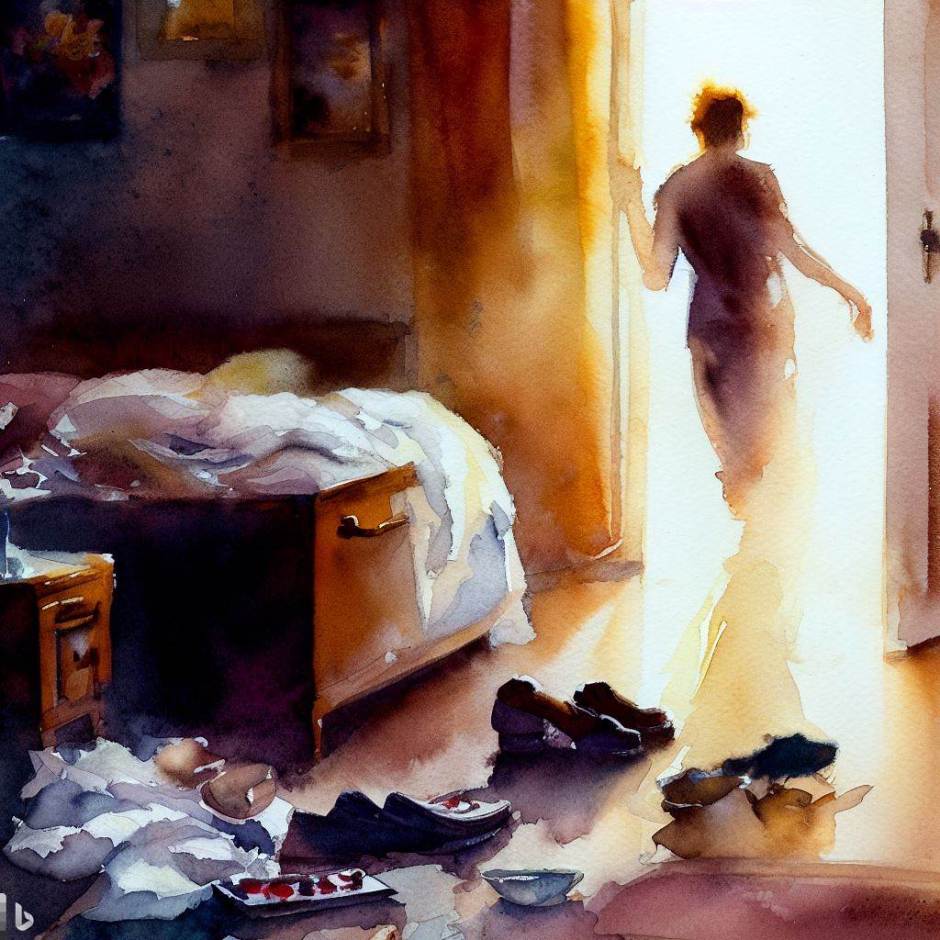
It takes a while to finish all the morning routines
before opening the curtains, which inevitably marks
the beginning of a new day, but once you accept
that waking up hurts, you can always find some solace
in the opening 4’33”, and then all you have to do
is pass through the bedroom door for another barefoot
pilgrimage to the shoe rack full of pairs of Louis Vuitton,
as genuine as Vermeer’s The Supper at Emmaus,
your favourite.
The lost caress of dosh
Practicality aside, there is a certain beauty to the old imperial coinage.
All those sovereigns and crowns and their halves, guineas, shillings,
and farthings—not to mention bobs, coppers, or tanners—are pure poetry
marked with the royal physiognomy. And while I appreciate the ease
of counting money after decimalisation, I still have a feeling something was lost
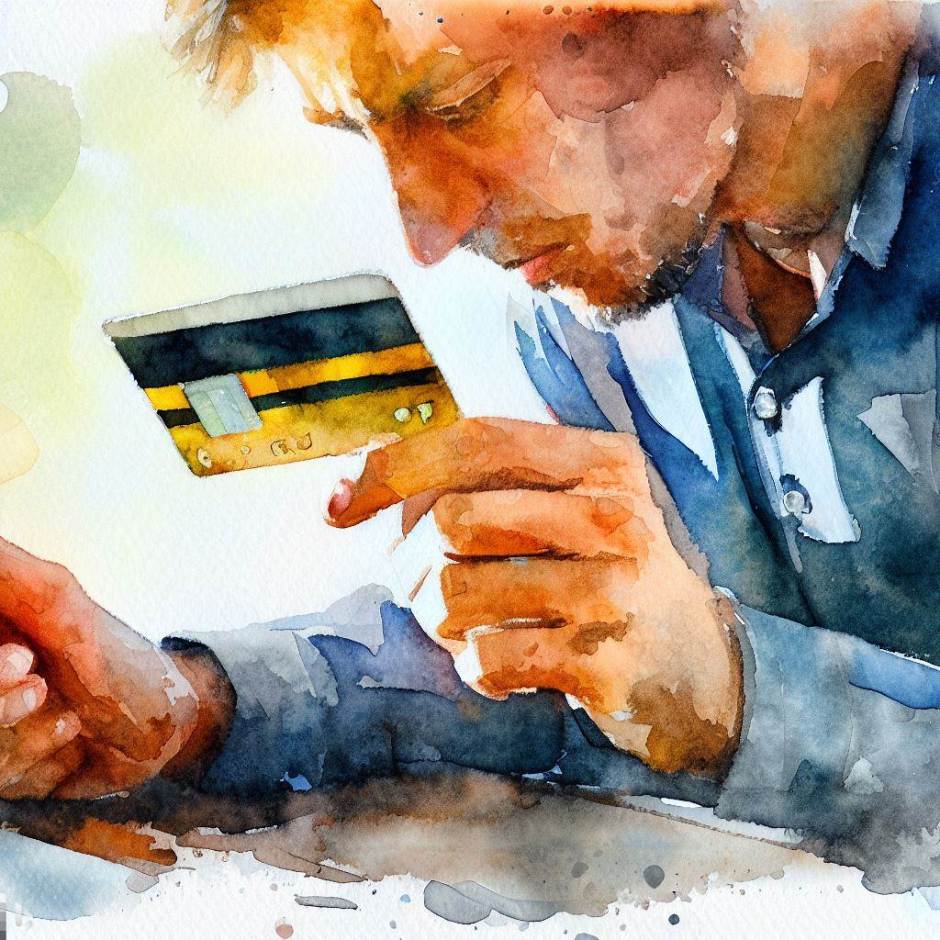
in the process—even more so once a quid became nothing but a virtual row
of zeros and ones spent with one careless swipe of a piece of plastic.