Journal (To sharpen your wits)

I know it’s just grammar, but English sometimes makes me feel uncomfortable due to the constant repetition of words, especially personal pronouns. In my native language, this would be considered a failure of style. But perhaps me being pernickety is just a smokescreen by my shallow mind in denial, and even if every now and then I do happen to have a thought that might be worth sharing, I’m too afraid to do so because every important aspect of life is a subject to controversy, and I’m terrified of conflict. Of course, I could always lean on the crutches of institutional authority, as I did in my journalism days, but this helps only in the professional sphere—personally, I’m a chicken.

Perhaps it’s a matter of my upbringing. I must admit that reading the Epistles, the thirteenth book of The Good Book, in my late forties was something of a revelation, and I deeply regretted not having known its contents in my youth. The problem is also in the fact that the modern education system we are put through is neither in a position to fill the shortcomings of parenthood nor pursue master-disciple-style mentoring. In reality, it’s more like a grinder or lawnmower for shaping an efficient and reliable workforce.

What’s left is self-education. But here lies the problem—you can’t do that alone. As Michel de Montaigne rightly noticed, “conversation with men is of very great use and travel into foreign countries; not to bring back (as most of our young monsieurs do) an account only of how many paces Santa Rotonda—[The Pantheon of Agrippa.]—is in circuit; or of the richness of Signora Livia’s petticoats; or, as some others, how much Nero’s face, in a statue in such an old ruin, is longer and broader than that made for him on some medal; but to be able chiefly to give an account of the humours, manners, customs, and laws of those nations where he has been, and that we may whet and sharpen our wits by rubbing them against those of others.” (from “The Essays of Montaigne—Volume 05” by Michel de Montaigne, translated by Charles Cotton) I especially agree with the idea of travelling to foreign countries because I have first-hand experience with its power and how it changes your perspective and way of thinking. It’s a pity it didn’t happen until I was thirty.


Journal (No such thing as a free drink)

Falling in love is like a shot on the house in a dubious establishment—free and intoxicating but not without its unpleasant consequences the next morning. The barman is a professional who knows what he is doing, as there is no such thing as a free drink—it’s a trap to make you crave some more, where every next jigger costs you double. At the end, you wake up in a dodgy apartment, laying on the floor in your own spew, or worse—on the street. The irony is that you despise it and promise yourself never again, only to end up in the same bar the very next evening, asking for another round. Lucky few who have never fallen victim to this addiction.

Journal (Already a ghost)

It’s been three years since I’ve been alone—longer if you consider the period in which my marriage fell apart—and I think I’ve got used to being on my own; I don’t need anybody in my solitary life anymore. At least that’s the mantra I kept telling myself every morning after waking up and every evening before going to bed. But today I met a woman who proved that I’ve been wrong all this time. Well, met is perhaps an overstatement, as she passed me in the grocery aisle as if I were nothing but a mere shadow on the floor, which isn’t much of a surprise considering she looked about half my age and was stunningly beautiful. I must have looked absolutely ridiculous, stopping at the sight of her as if I had turned into a pillar of salt, assuming, of course, that she even noticed me. Even more amazing was that she spoke my native language to the couples she met further down the aisle.

I have no idea who she was, and I’m sure I’ll never see her again. And even if so, what could I offer her? I’m a nobody—a bitter middle-aged man, ridiculously shy and awkward in social situations—who used to write poetry and now just pretends to have something to say in his journal until he gives it up, like everything else in his life. No wonder I’m not afraid of death—I’m already a ghost.

Journal (Forever)

How long is forever? Wait, did I just wake up to ask this question, or did the question wake me up? All I know is that every time I open my eyes unexpectedly in the middle of the night, the time stretches on forever, although I’m not sure if this time it actually was about time. Anyway, I remember when I was a little boy, like a member of some primitive tribe whose numeral system was limited to one and many, “now” was the only tangible idea that I could understand. So “forever” was anything other than this instant. But I guess that’s something common for all children. With time, we all overcome this little shortcoming and forever move to a more abstract conceptual realm, unless, of course, we use it in some metaphorical way, as when we complain about having to wait forever for a loved one to call. There are also those who fetishize “forever” with their wet dreams about everlasting life, but they should be careful what they wish for; they just might get it. That would be nothing but the hell of paradise all over again.

Journal (A little gem found in the ashes)

There are films I watch for a single scene only, but to appreciate that scene, you have to see the whole film. Like the one in Marianna Palka’s Motherhood, also known as Egg, where conceptual artist Tina asks Karen, her friend since art school, who is now eight months pregnant and came with her husband to visit her, just as the guests were about to leave her apartment, to send her a picture of Elliot when he is born, thus reviling the gender of the expected child to the father. It may sound unremarkable, but it’s not. That single scene in an otherwise mediocre film is like a little gem found in the ashes, as beautiful as unexpected. And it’s the same in life, with those rare moments we encounter in the currents of everyday mundanity. We tend to forget them quickly, but eventually learn to treasure them and cling to them like a lifebuoy.

It reminds me of the words of George Falconer, the protagonist in A Single Man played masterfully by Colin Firth, who says in the dénouement: “A few times in my life I’ve had moments of absolute clarity, when for a few brief seconds the silence drowns out the noise and I can feel rather than think, and things seem so sharp. And the world seems so fresh, as though it had all just come into existence. I can never make these moments last. I cling to them, but like everything, they fade. I have lived my life on these moments. They pull me back to the present, and I realise that everything is exactly the way it was meant to be.”

And the most important part is that these moments are derivatives of our perception, not expenditures. We don’t have to travel thousands of miles or spend a substantial amount of money. All that is required is a slight shift in optics, perhaps some fine-tuning of the soul. And then even exchanging a glance from a distance with a fox in the middle of the city during an evening stroll takes on a transcendental dimension.

Journal (The itchy scar)

It’s puzzling how easily “I do” becomes past imperfect tense, and despite all the anger, regret, or whatever other feeling prevails, you have to let it go. And you do. Eventually. After all, it is not without reason that they say time heals wounds. But the itchy scar will remain for life. And like the good grammarian you are, you will continue to look for syntactic sugar to alleviate the bitterness of that new cup of tea you have managed to brew, hoping that someone will be tempted to join you at five with a platter of madeleines and one day help you scratch that itch.

Journal (A history lesson in real life)

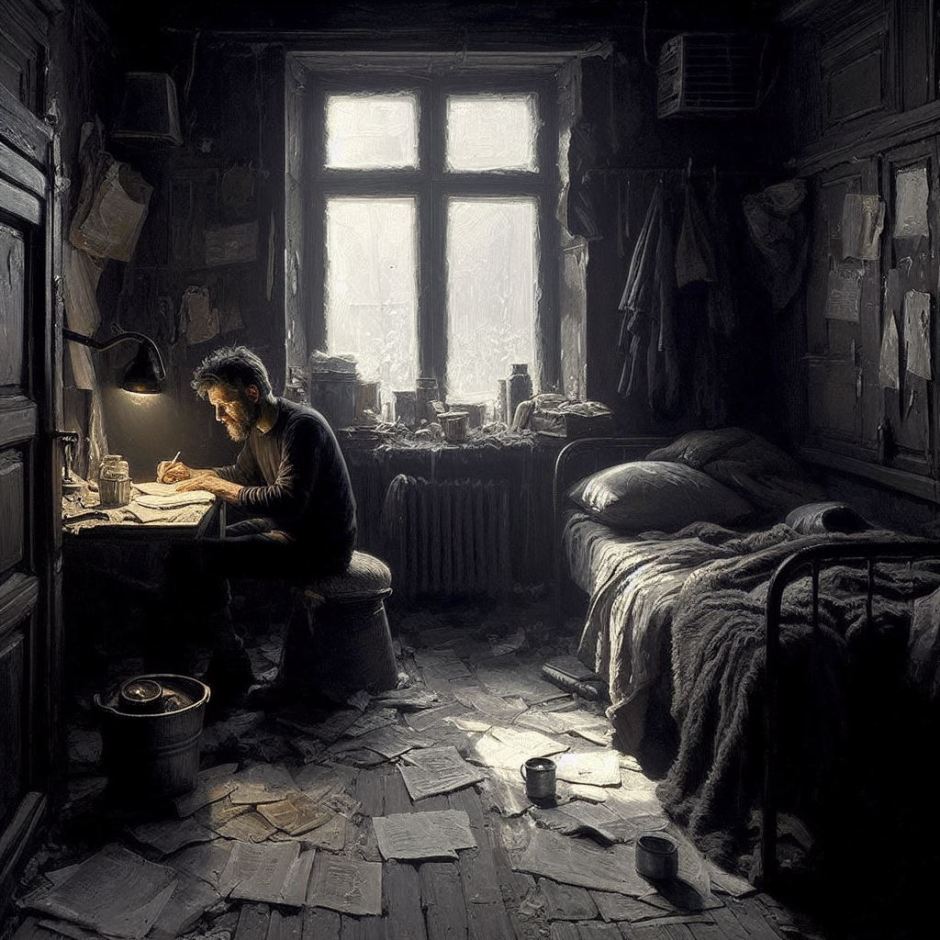
So it started again—the Scottish rainy, windy, cold autumn—and since the walls of the building I live in have no insulation whatsoever, just like last year, I locked myself in the small bedroom, moving there also my desk, as it’s the only room in my flat that is actually possible to heat up to some sensible temperature. The larger bedroom that I normally use as an office, with the radiator turned on full, can barely hold twelve-ish degrees during the winter. So, for the next several months, my bedroom will be my nest—or a prison cell, depending on the perspective we look at this arrangement from.

On a positive note, I can say that it gives me a good insight into the living conditions of the very first inhabitants of this place. Like a history lesson in real life, where the daily ablutions are a particularly interesting experience. But, as they say, what doesn’t kill you makes you stronger. However, one could expect that, after a hundred and twenty years or so, something would change. Insulating the walls of buildings in the cold north seems so obvious. Perhaps having expectations is a mistake on my part.

Journal (Standing next to the coffin)

Everyone’s going to die. It takes a philosopher or a desperate teenager to say this. Everyone else who should be able to address the topic is likely to ditch it. I’ve never understood why the subject of death is seen as depressing. Of course, there is nothing to celebrate for obvious reasons, but since death is an inevitable part of life, we should at least treat it with equanimity.

I remember when my father died. On the day of his funeral, my grandmother asked me to take a picture of her standing next to the coffin. At the time, I found her request absolutely bizarre. I’ve never been particularly fond of taking pictures in the first place, but such an occasion seemed even less suitable to capture in a photo. And yet here I was, satisfying her request as if we were at a family picnic, having fun. But maybe that was exactly the approach to death I have now. If we photograph birthdays, weddings, holiday trips, and every other event in our lives, then why not funerals? What’s so strange about that? After all, it’s just another life event.

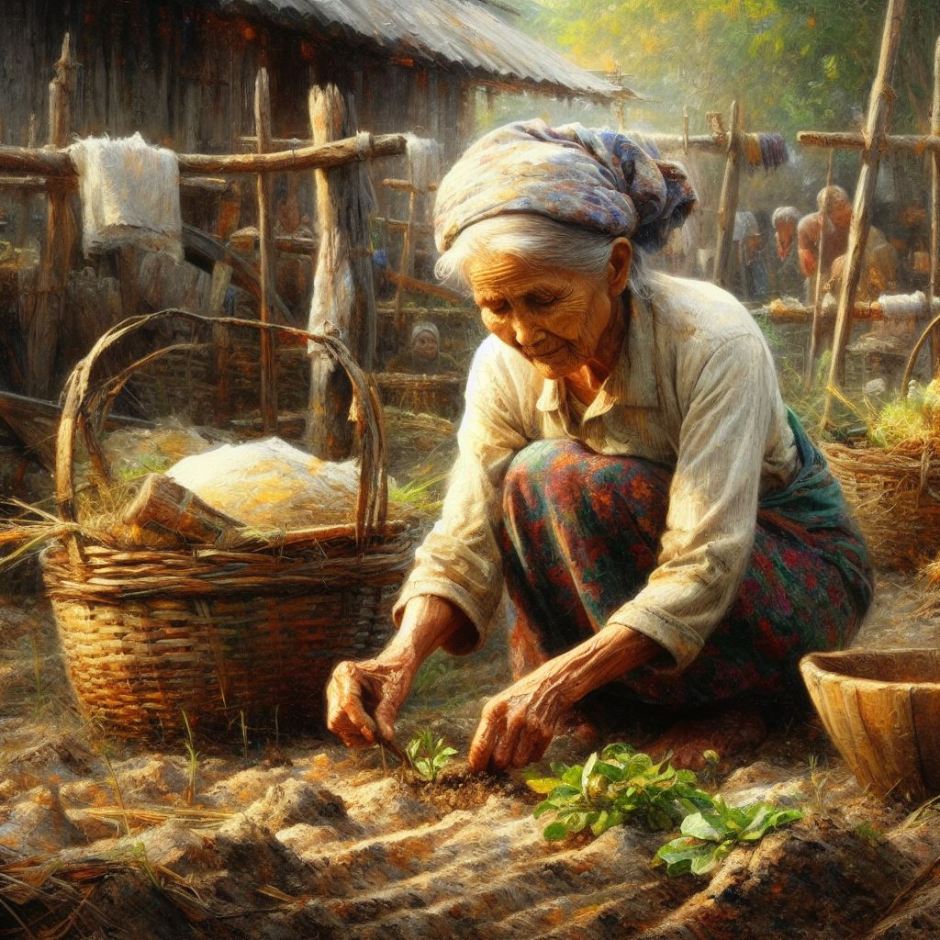
My grandmother lived in a small village, far from any city, and I never perceived her as a philosophising type. The few memories I have of her are related to her work on the farm. Perhaps I should have talked to her more when I still had the chance. Who knows what I would have learned from her? It’s sad that we learn to appreciate people only when they are no longer with us.

Journal (People like us)

It is difficult to see actors as real people, flesh and blood, with their own ordinary lives and problems, because we only see them on the silver screen, in tabloids and gossip columns of glossy magazines. Once they emerge from the shadow of anonymity, with all the glamour of their immaterial lives, we give them the status of demigods. Even their life in the afterlife would have some special dimension, even if it was hell—see Wings of Fame with Peter O’Toole and Colin Firth.

Therefore, it is even more shocking when it turns out that they are subject to the same randomness of fate as each and every one of us. Just like today, when I was watching The Revengers’ Comedies, I saw the familiar face of a young actress who I remember from Four Weddings and a Funeral—Charlotte Coleman. In the latter, she was like a funny, pretty little gem. So intrigued, as I haven’t seen her for a while, especially in any newer production, I decided to check what she was up to nowadays. I was saddened when it turned out that she died in 2001, at the age of only 33, which I didn’t know. Moreover, her life was marked by the tragic death of her boyfriend.

So, it’s worth remembering that despite their peculiar profession, actors are just people—people like us.