I curse the day

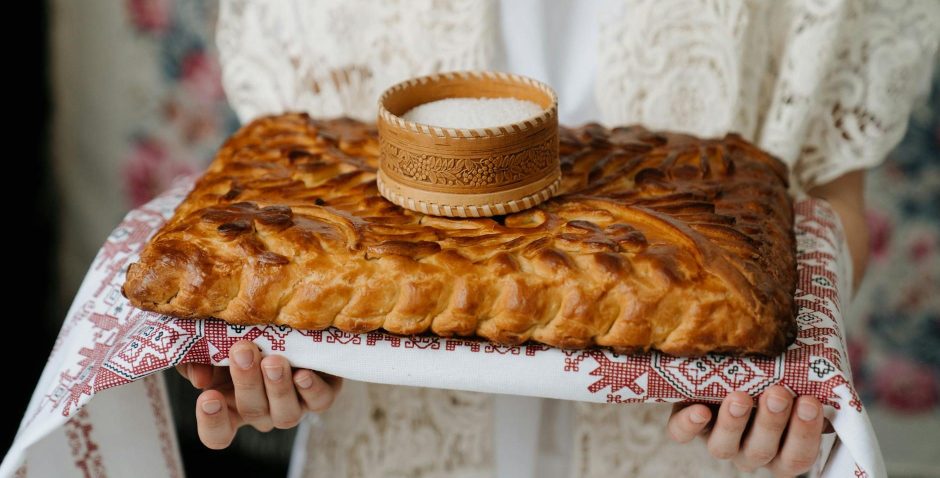
I curse the day I tasted bridal bread and salt.
I curse the day I met the future posy thrower.
I curse the day I let the dissolution slip through my fingers.
I curse the day I woke up in a stretcher.
I curse the day I was born,

most of all.


More words to ponder at maciejmodzelewski.com

Selfish genes

I find green on blue rather disturbing, especially in their radiant, sun-drenched shades, which sounds a good deal sillier now, when I said it out loud. It’s like thinking you’ve married a woman and then, the day after the fair, realising that she’s a mother first and foremost and that she’ll turn you into a walking wallet once you’ve done your marital duty. But that’s evolution for you. Genes don’t give a tinker’s curse about your dreams and aspirations—their one goal is to replicate. If only there were a way to give them the middle finger once and for all.


More words to ponder at maciejmodzelewski.com

The vows

Dear Strachey, while sharing, at least in spirit, some of the paraphernalia of cultivation—you had Baudelaire; I have T.S. Eliot—if only I had known you then and shared your outlook on marriage to begin with, and if my admiration for your intellectual finesse had passed beyond the tantamount to witnessing polyorchidism under an ultrasound examination, I might not have stepped into that sanctimonious staple just to regret it dearly afterwards. But I met you late in my aimless peregrinations, so everything turned out the way it did, and all that remains is to share one piece of wisdom—don’t trust vows without a prenup.


More words to ponder at maciejmodzelewski.com

All I know

If only I had been heartless
and thus never born,
perhaps the photographer would never have taken pictures
of the funeral procession my parents’ wedding was.

I always wondered where those grim faces came from
until one day one of the photos fell out of the album,
and I saw the date written on the back—a quick calculation explained everything.
After all, casarse de penalty, as the Spanish call it, is no cause for celebration,

and that’s about all I know
about love.

Commiserations

I learnt a new word: commiserations.
Ironically, it was used in response to the news
of someone’s engagement,
but frankly, having tried wedlock myself,
I understand the sentiment.
However you slice it, marriage has always been
and always will be a soul-crushing trap
that complements the cruelty
of birth.

Calling my name

My name means ‘gift of Yahweh,’ which is ironic
considering I don’t believe in deities,
and even more so since I was the sole reason
for my parents’ marriage in the first place,
and it wasn’t a happy one. If I were to guess,
they probably had no idea. But come to think of it,
even if I had a name as solid as Peter,
I would still have to get used to being alone
and learn to live with the pain
gradually spreading throughout my arm.
And while I never liked it, it seems having a name
chosen on a whim wasn’t the worst thing after all.

Journal (Already a ghost)

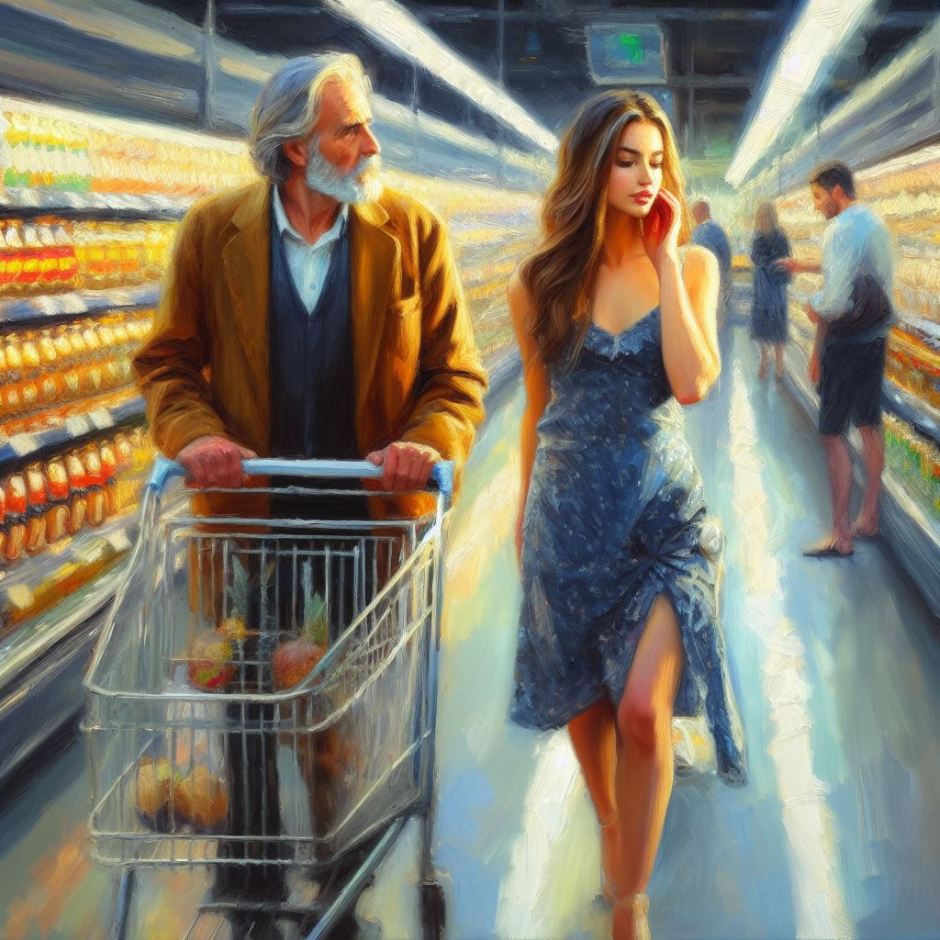
It’s been three years since I’ve been alone—longer if you consider the period in which my marriage fell apart—and I think I’ve got used to being on my own; I don’t need anybody in my solitary life anymore. At least that’s the mantra I kept telling myself every morning after waking up and every evening before going to bed. But today I met a woman who proved that I’ve been wrong all this time. Well, met is perhaps an overstatement, as she passed me in the grocery aisle as if I were nothing but a mere shadow on the floor, which isn’t much of a surprise considering she looked about half my age and was stunningly beautiful. I must have looked absolutely ridiculous, stopping at the sight of her as if I had turned into a pillar of salt, assuming, of course, that she even noticed me. Even more amazing was that she spoke my native language to the couples she met further down the aisle.

I have no idea who she was, and I’m sure I’ll never see her again. And even if so, what could I offer her? I’m a nobody—a bitter middle-aged man, ridiculously shy and awkward in social situations—who used to write poetry and now just pretends to have something to say in his journal until he gives it up, like everything else in his life. No wonder I’m not afraid of death—I’m already a ghost.

Journal (Love is blind)

Montaigne said that “in all republics, a good share of the government has ever been referred to chance. Plato, in the civil regimen that he models according to his own fancy, leaves to it the decision of several things of very great importance, and will, amongst other things, that marriages should be appointed by lot;” (Montaigne, 2004).

Let’s think about that last part for a moment. Apart from the fact that these were supposed to be temporary marriages made at festivals to orchestrate eugenic breeding (Brake, 2021), the whole idea is not without some merit. Our Western culture embraces the idea of marriage for love, but keeping in mind that there is a good chance that it ends in divorce or makes couples unhappy over time (DePaulo, 2013), I’m not convinced that it actually works very well. There is a saying in my native language that perfectly fits that hunch: love is blind, and marriage is the best ophthalmologist.

So why not leave the whole affair in the hands of fate for a change? Who knows, maybe we’ll have better luck in this case than with choices made under the influence of the hormonal storm in our brains. Of course, I realise that this is not actually feasible outside of a thought experiment, and I can see many things that could and most likely would go wrong—I’m not that naive—but I also have a feeling that there is a chance for something good in this as well. Besides, we already use dating app algorithms for matching, so is this really that much of a difference?

Because what is the alternative? Suffer in silence with this stranger whom we call our spouse out of habit, or finally come to terms with the idea that marriage is only a temporary matter and establish this state of affairs legally by creating fixed-term marriage contracts, for example, for a decade, with the possibility of extending them for another period if both parties wish so.

References:
Brake, Elizabeth, “Marriage and Domestic Partnership”, The Stanford Encyclopedia of Philosophy (Fall 2021 Edition), Edward N. Zalta (ed.), https://plato.stanford.edu/archives/fall2021/entries/marriage/
DePaulo, Bella, “Marriage and Happiness: 18 Long-Term Studies”, Psychology Today (15 May 2013), https://www.psychologytoday.com/us/blog/living-single/201303/marriage-and-happiness-18-long-term-studies
Montaigne, Michel de, “Essays of Michel de Montaigne—Complete”, Project Gutenberg (2004), W.C. Hazlitt (ed.), C. Cotton (transl.), https://gutenberg.org/files/3600/3600-h/3600-h.htm