Journal (When’s the day)

Ever since I first spotted it on a billboard, I’ve always wondered if life truly was a fatal sexually transmitted disease. But cheer up. Nothing like A Bit of Fry and Laurie in “when’s the day”—I mean, Wednesday—evening, to be precise—after, started with the obligatory good morning, all day of hordeing at work to earn your fiver for a pint of bread—I mean a loaf of lager—I mean … You know what I mean. Well, except for the fact that your own bathroom light switch was just trying to electrocute you. But that would finally solve the dilemma, wouldn’t it, or at least dump it on some other poor bastard’s head? There is an endless supply of us, I can promise you that. So, cheers, my friend.

Journal (Something more to come)

I like watching trailers for the films I have already seen. They are like old photographs in a family album—photographs of places I once visited but neglected to return to, sounds still familiar yet distant, feelings kept in the shadows since ever. I like watching trailers because they allow me to fill in the rest of the story in my own tone, especially when the film wasn’t all that good in the first place and I only remember it for the perfect moments, like diamonds in the ashes. I like watching trailers for films I don’t know because they are a promise of something more to come—unlike every day of my life.

Journal (Catharsis)

Once again, I woke up in the middle of the night and couldn’t sleep. I know it well, and since there is no point in tossing and turning in bed, I got up. Anyway, I’m aware that there are things I need to write about, and this is probably what prevents me from falling asleep again.

First of all, who is this journal written for? This is important because it determines the style and content of all its entries. If the answer is the readers of my blog, where I publish fragments of it, then yesterday’s entry is fully justified. But I don’t think that is the case. I was supposed to be the main focus—my thoughts, ideas, feelings, and dilemmas—all written with myself as the main audience in mind. After all, that is what a journal is all about, isn’t it? With all due respect to the external readers, they are just complementary characters that blend into the background.

And that brings me back to Karen Cinorre’s film. I’ve already seen it, so there is no problem analysing it with all the details I know. Besides, my blog readers could always find the whole plot on the dedicated Wikipedia page.

So, as I see it, apart from the protagonist, the main characters of the film are personifications of the heroine’s feelings after the sexual assault on her: fear, withdrawal, and anger/hatred, with the last one becoming the main driver of the new reality she has fallen into. The island on which the film takes place symbolises her mind, which becomes both a refuge and a prison, and the camps of women all over the island are mental connections with the women victims of sexual abuse all over the world—she hears their voices in many languages brought by the wind and the sound of sea waves.

What brought her to this place were suicidal thoughts, and while on the island, she has to decide whether she will give in to these thoughts or rather find something that will allow her to continue living after what she went through, as well as what feelings will guide her through this rebuilt life. The fact that the director, being a woman, still gave the protagonist’s male friend the privilege of being the beacon that brought the main character back to life shows that men as a gender are not perceived as evil incarnates and that friendship, love, and the most important—life alongside them—are still possible even after such a horrible experience.

This film is cathartic, and I’m glad I had the opportunity to see it. I can’t wait for Karen Cinorre’s next work because she has a very distinctive voice that will not leave you indifferent.

All the trinkets of my day

I like that brief pause at the dust jacket flaps
before the serpentine sentences call me
to follow their long stretches and sub-clauses
introduced with all the althoughs, therefores,
and whiles pulled out of the conjunction hat.
I like the cat’s morning yoga for atheist classes
before the obligatory glass of milk-and-water bliss.
I like a furtive one last sniff of the night’s remnants
hidden in my pyjamas before I wrap myself
in the armour of an everyday suit.
And there are a few other trinkets like that,
but the point is, if there is a silver lining to life,
these would be the closest.

It starts with a shower

No longer one, but not yet another either, I’m stuck in a limbo
where, one by one, the little things of everyday life lose their relevance.
How come, you may ask? It’s quite simple, really. One day, one stays
too late into the night to take a shower, and being a creature of habit,
the next thing one knows, one’s not taking it at all for a week or two.
The same goes for everything else.
And the remoteness of the modern world makes it awfully simple,
because once you take yourself out of the social equation,
such things become basically inconsequential, so why even bother?
But the real problem begins when negligence in trivia spills over
into more fundamental matters. And once a feedback loop fires up,
you are doomed. So better remember about your shower,
or dirty dishes in the sink, or whatever it is you decided to skip
before it all spirals out of control. Mould in a cup with leftover
coffee grounds is one thing, but a debt collector on the doorstep
is a different story entirely.

No need for rain when no one cries

I bought this fancy camera once, only to lose interest in photography.
Some other time, I spent hours rehearsing small talk and still chose solitude
like every other hermit among the city dwellers. And since I’m bookish,
I knew marginalia were my bread and butter, but one way or another
I had to face the question: Do I lose interest in everyday life?
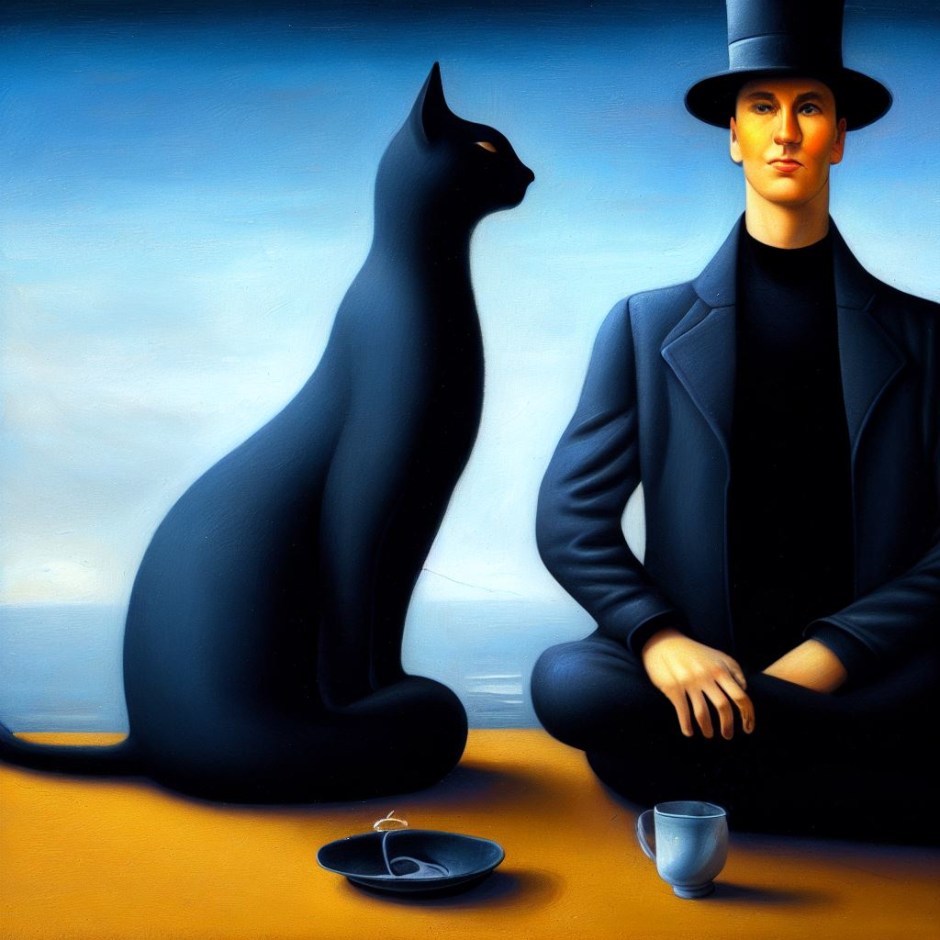
Then again, like a faceless man in a bowler hat, every now and then I think
that I’ve actually caught a glimpse of something—I just don’t know
what exactly it is yet—but it always turns out to be nothing
but my imagination.

Time does not need a notebook

My notes are full of random phrases,
thoughts cut off mid-sentence,
now devoid of context,
phone numbers that no longer matter,
and hard-to-decipher scribbles
that were probably meant to represent something.
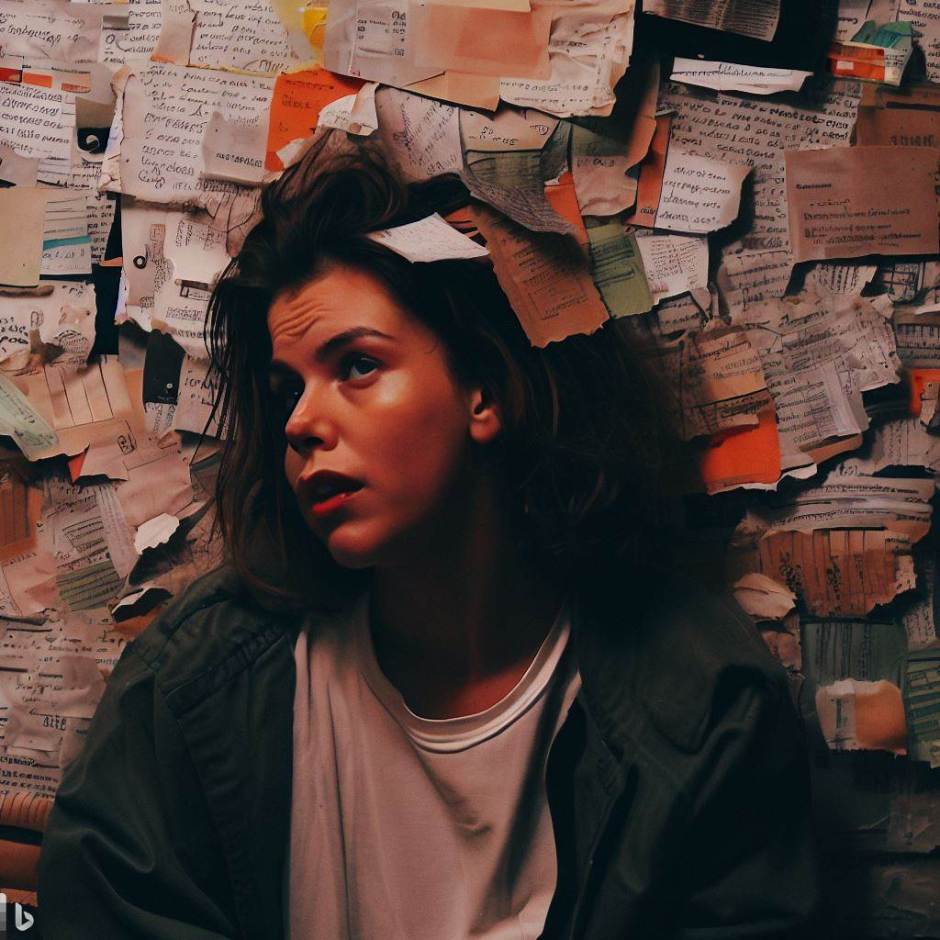
Quite a patchwork, needless to say,
but still the best capture
of my dishevelled life at hand.
And to add an extra splash of colour to it,
I don’t even have a proper notebook;
it’s all on scraps of paper,
on the backs of receipts and tickets
that pile up in an old Christmas basket,
with time playing Secret Santa.

I still have my fountain pen

Somewhere between a punching bag’s punching bag
and a fully fledged piss-artist, you decided that life is not long enough
to carry on like that, but you also know that it’s nothing
but an act of pure cruelty if you constantly complain about it
and still decide to bring a new one into this wretched realm of yours.
Then you may recall the invisible you barely knew, and only briefly,
as your blooming youth denied him a single breath in your vicinity.
The problem is that he has long disappeared from your sight,
and you have no idea where to start to find him.
I can give you a clue: always look for the one with a book,
mastering the sigla of the Leiden Conventions or chasing the quiet of a meadow
enchanted in the vellum pages of the Voynich manuscript.
Once you find me, never let me go. We may have enough time
for one last vacat page to fill.

Survival

Burying a dead bird, we listened to Gil Shaham’s violin in L’inverno.
Then I kissed your ink-stained hands as if nothing had happened,
and we embraced the routine: uneventful nights, quiet mornings,
and tedious climbing up whatever followed, day after day,
with the help of white lies and unsolicited acts of kindness.

Is it possible to die when life is an obligation and love is a calamity?
Can I at least change my mind on the little things once I tell you a story
about my day—an ordinary day, one of those where it’s possible to pass by unnoticed
like an idea of happiness, when it’s easy to regret since life is selfish
and a hug requires a script?

In a way, the word morbid sounds like a promise
that, with some strong language, the light could manage to get through
the shrouds that cover windows, and you no longer have to choose
between Latin and Greek profanities, knowing that survival is nothing
but performance.