The memory alley

How can I remember my future
when my past has been gravely misspelt—
with all the hasty gerunds
and coarse-grained adjectives
serving no purpose
other than ornament—
and even rain has lost its subsumption
in such an unconceivable milieu,
so that when I entertain the idea
of using the vested Pooterish umbrella,
I always have to consider the wistfulness
of the draught?


More words to ponder at maciejmodzelewski.com

Nothing like a strong name

I like the name Paul. There is a strong but warm ring to it, and the way you shape your lips to say it, as if you were about to kiss, sends shivers down my spine. If I had a boyfriend, I’d love it if that was his name. On the other hand, I’ve never liked mine. Every time I say it, I feel like I have a large dumpling in my mouth, and I picture a klutz and a bit of a plodder. Oh well, one cannot have everything in life.


More words to ponder at maciejmodzelewski.com

The ignoble writing implement

Why does the word ‘computer’
not have the noble ring of a ‘fountain pen’?
Even a ‘typewriter’ sounds better
than the name of the Difference Engine’s progeny,
though I could always say that I wrote this verse
on my PC (yuck!) or a desktop.

I wonder if the poet had the same problem
when quills had gone out of use.


More words to ponder at maciejmodzelewski.com

An occasional act

Full of words with an expiration date,
like ‘forever,’ for example, and untimely goodbyes,
the undelivered mail, piling up on the top of the radiator casing in the hallway,
reminds me every time I pass by that I’ve always dreamed
of a slice of blueberry pie with ice cream,
and yet with my face exposed to the late winter sun
and a square of dark chocolate melting on my tongue,
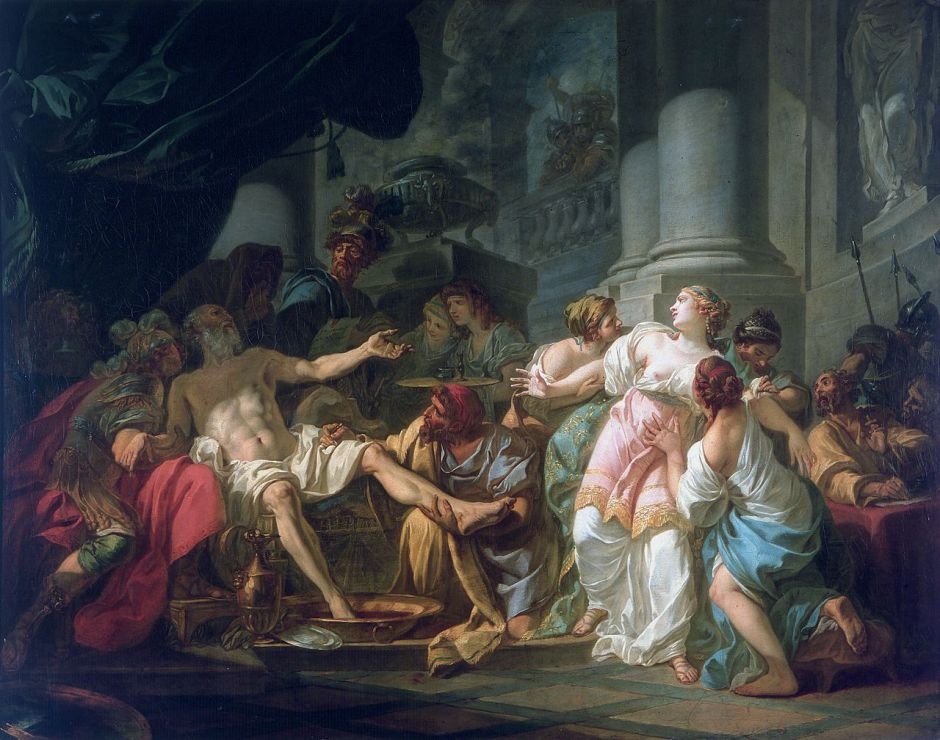
all I can think about is the death of Seneca as told by Tacitus—a cold reminder
that life, at best, is nothing more than an occasional act
of unrequited kindness.

I keep talking

I have nothing to say, and yet I keep talking,
meticulously combining nouns, personal pronouns, and verbs,
adding an occasional adjective here and there, so as to hide
in the multitude of dependent clauses—each introduced with the most unique
subordinating conjunction I can think of—my utter inability to form and express
an original thought of my own (it’s a bit like in the kitchen
when you dream of your own signature dish,
or at least a decent phoritto or some other fusion food,
and you end up reheating a ready-made meal, glad
you didn’t burn it).

Journal (The art of translation)

Translation is a tricky endeavour, and you can easily spot the problems if you happen to know both the language of the original text and of the translation, as it happened for me in the case of Diary by my favourite Polish intellectualist, Witold Gombrowicz, which I have in two editions, original and translated into English, and frankly, I’m not particularly fond of the latter.

This particular text aside, it’s one thing if the root of the problem lies in semantic equivalence, but it’s something else entirely if contortions, whether accidental or intentional, come into play, as in the quotation from Cicero’s Tusculanæ Disputationes that I found in The Essays of Montaigne—Volume 05 by Michel de Montaigne, translated by Charles Cotton. “Hanc amplissimam omnium artium bene vivendi disciplinam, vita magis quam literis, persequuti sunt.” is translated as “They have proceeded to this discipline of living well, which of all arts is the greatest, by their lives, rather than by their reading.”

Apart from the fact that in the original this is not an independent sentence but the conclusion of a longer one, it has misspelt two words since the original text is “hanc amplissimam omnium artium, bene vivendi disciplinam, vita magis quam litteris persecuti sunt.” (Tusculanae Disputationes, M. Tullius Cicero, M. Pohlenz, Leipzig, 1918), and in translation by Charles Duke Yonge, for example, it reads as follows: “yet promoted this most extensive of all arts, the principle of living well, even more by their life than by their writings.”

Someone might accuse me of nitpicking details, but I see fundamental differences between “proceeded” and “promoted”, and “their reading” and “their writings”.

Actively bored

You will never see the peculiarities
of your own language
or really appreciate its beauty
until you learn another one.

Only after emigrating,
while delving into the intricacies of English,
did I notice that in my mother tongue
there is a construction that is contrary
to the principles of logic.

The negative concord was quite a surprise,
and once I saw it, I was baffled at
how something so obvious
had escaped my notice
for almost three decades.

On the other hand, if I think of diminutives,
English is not even remotely close
to what one can achieve in Polish.

And if the doldrums struck,
in my native language, you could say I’m bored
but also express that in a more active,
if untranslatable, form.

The language of demise

My first child was never born—the foetus failed to develop a heart and died.
The doctor assured us that we had nothing to worry about because, in the first
pregnancy, such things happen often—kind of a false start—and the next one
will be perfectly fine for sure. What really struck me then was the discrepancy
in the language. I guess the child occupied the parental realm of the possible,
while the foetus was the clay-cold reality of medicine.