Journal (A gracious AI or an obnoxious human)

I’ve never been into games. I find them dreary, but they also require interaction with other people, and that’s a challenging endeavour for me. For most of my life, I stayed on the sidelines, observing others running like lab rats in a maze, which proved convenient when I started working for newspapers. That’s probably why I became a journalist in the first place, as it embraced this habit of mine, allowing me to make a living out of it while at the same time feigning involvement in the affairs of others, at least up to the final punctuation mark, so I could for a little while convince myself that the detachment from the real world that I have always felt is nothing but my imagination. However, one may ask oneself what is more desirable: indifferent reliability or compassionate inadequacy (knowing people, they would aim for compassionate reliability—what a greedy creature human is). But it turns out that if you sugarcoat the former with an impression of sympathy, we are more than happy to embrace it, like the Diplomacy board game players, who were happier to lose to gracious AI than obnoxious human players (see What If the Robots Were Very Nice While They Took Over the World? by Virginia Heffernan in Wired magazine).

Journal (The forgotten art of writing letters)

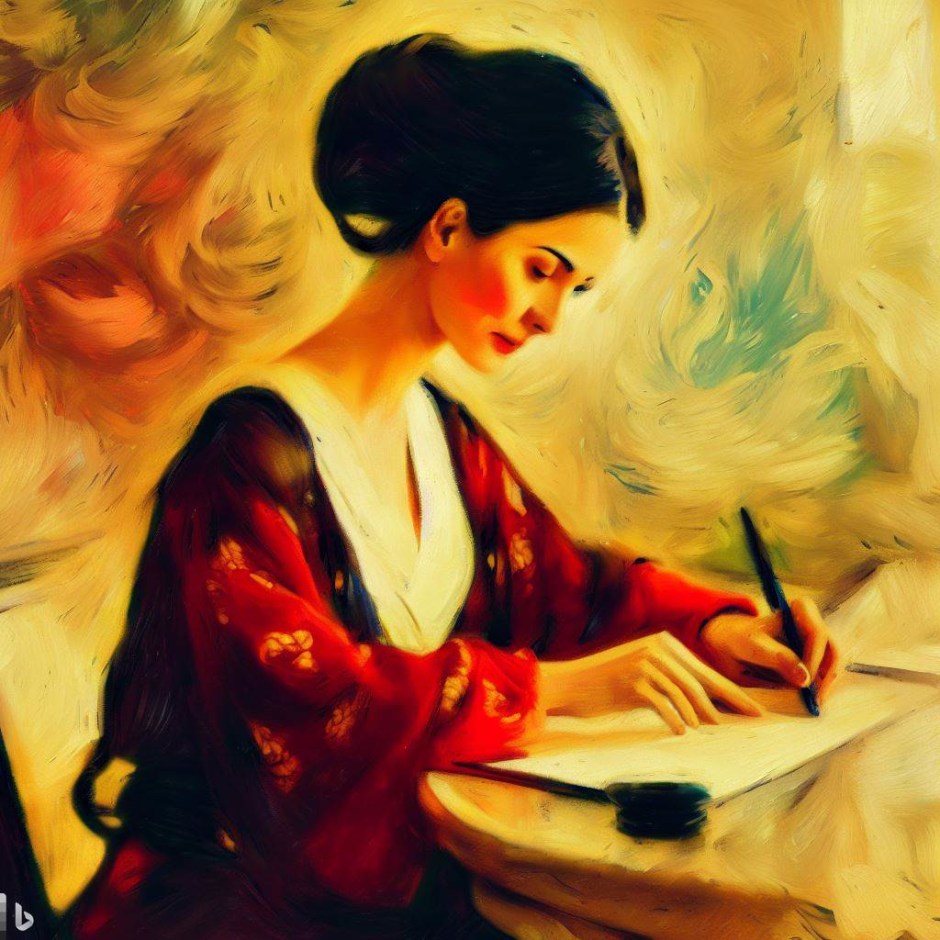
I miss the mostly forgotten art of writing letters. For centuries, millennia really, epistolography was at the heart of our social life, with letters as one of the means of communication helping maintain relationships and exchange thoughts and ideas, but now the only letters most of us are receiving are notices from the government—even utility bills and bank statements arrive electronically, which is actually a good thing considering the environmental impact—and perhaps Christmas cards. Nowadays, it’s not even email that has taken over, but all kinds of instant messengers on our mobile phones and social networking sites. This fragmented, casual, surface-level communication negatively impacts our ability to formulate more complex thoughts. And, by the way, our reading habits don’t help either.

I just looked at the clock on my dresser and realised it took me an hour to write this paragraph. What happened to me? Why am I so distracted? After all, for years, writing was my daily bread because I earned my living as a journalist. And now this! I really hope this journal will help prevent further degradation.

Journal (Bright but lazy)

My education is quite a complicated story. Bright but lazy was the general opinion teachers had about me when I was still in primary school. It’s not that I couldn’t have done more in terms of my academic achievements—I learned all of seventh-grade maths in one weekend to prepare for the end-of-year exam, scoring better than the model student in our class—but it just never really interested me. I preferred to immerse myself in the world of literature. At that time, reading books bordered on obsession. The book was the first thing I took in my hands after waking up. I ate while reading, I walked to school with a book in front of my face (I’m still surprised I was never hit by a car), and in class I read with a book on my lap under the desk so the teacher wouldn’t catch me. Books filled the rest of my day after school, and when my parents finally turned off the light in the middle of the night, I stood behind the curtain and read by the light of the street lamp in front of my room window.

This situation continued throughout my entire education, abruptly interrupted when I failed one of my final exams, and instead of going to university to study philosophy, I ended up in the army. I passed the exams eventually after quitting the army, but at that time, the reality of adult life hit, and I had to find a job.

A few years later, after saving some money, I started a part-time study at Jagiellonian University, the oldest and one of the best universities in the country. I studied the cultures of ancient Rome and Greece, but after a year, my finances did not allow me to continue. My father lent me some money, but this time I decided to be more practical and switched to political science with journalism at my local university. It made more sense because, at that time, I was already working for the largest daily newspaper in the region, and half of my colleagues were studying there. Unfortunately, I devote more attention to work than to studies, and I failed the year. And that was it. Only a few years later, I returned to Jagiellonian University to study comparative literature as an aspiring poet, but again, it turned out to be just another one-year stint.

It required hitting the brutal reality of immigrant life and six years of hard work studying while in a full-time job for me to actually get a university degree. But even that wasn’t without some turmoil, as I started in mathematics and statistics just to switch after two years to computer science. But in the end, I finished it. The odd thing is, it stopped having any meaning for me. Perhaps because it happened at the same time as the breakdown of my marriage. But that’s a different story.

Hunters

This is not your typical nine-to-five—utterance hunt, I mean. You struggle all day long
and through the night, whether it be journalism or poetry, just to get a glimpse of the truth
once in a while. I have been there, so I know. The only difference is that in one, you chase
facts of life embraced in words, while in the other, you pursue words embracing facts of life.

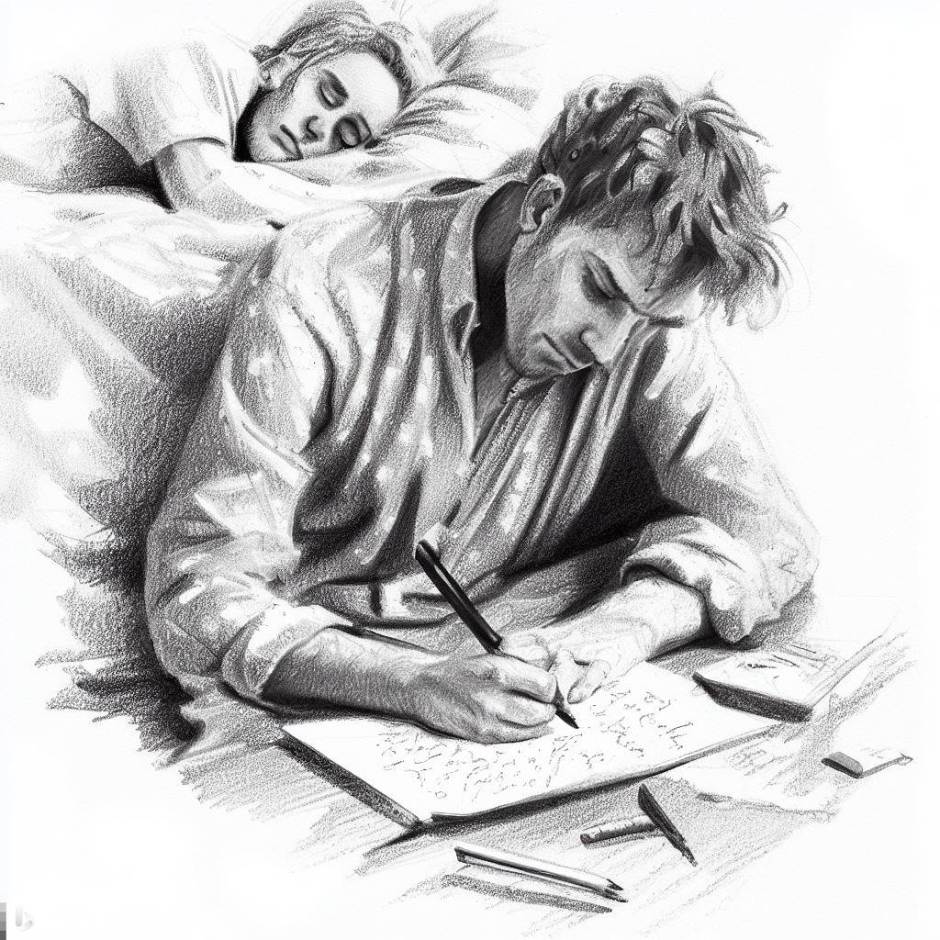
The meaning of life, or why write a poem in your pyjamas on Saturday morning

I have always been a man of few words. Even back in the day, as a journalist,
I preferred news over reportage. First, you clearly state the event, its location,
and the time frame. After that comes the purpose, and only then is the reason.
In the end, it turns out that life boils down to these five fundamental questions:
what, where, when, what for, and why, in that exact order. And yet somehow,
we are so fixated on the last two.