Journal (The forgotten art of writing letters)

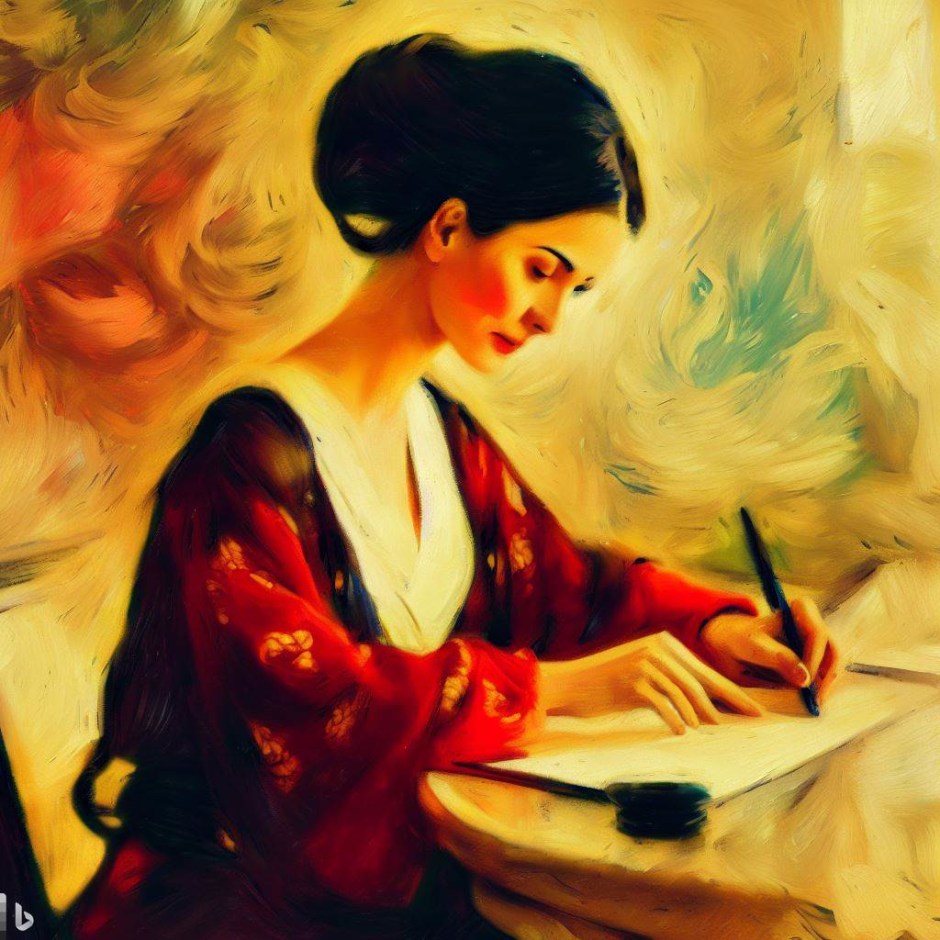
I miss the mostly forgotten art of writing letters. For centuries, millennia really, epistolography was at the heart of our social life, with letters as one of the means of communication helping maintain relationships and exchange thoughts and ideas, but now the only letters most of us are receiving are notices from the government—even utility bills and bank statements arrive electronically, which is actually a good thing considering the environmental impact—and perhaps Christmas cards. Nowadays, it’s not even email that has taken over, but all kinds of instant messengers on our mobile phones and social networking sites. This fragmented, casual, surface-level communication negatively impacts our ability to formulate more complex thoughts. And, by the way, our reading habits don’t help either.

I just looked at the clock on my dresser and realised it took me an hour to write this paragraph. What happened to me? Why am I so distracted? After all, for years, writing was my daily bread because I earned my living as a journalist. And now this! I really hope this journal will help prevent further degradation.

Journal (Forgive me)

I envy Étienne de La Boétie. Not only was he himself a man of many virtues, but he was also endowed with a great friendship, which lasted long after his untimely death, with another great Frenchman, Michel de Montaigne. Reading Montaigne’s letters published in William Carew Hazilitt’s 1877 edition of the Essays is moving proof of this.

I have always been touched by friendship, something I’ve never really experienced myself. I remember how fascinated I was reading the correspondence between Stanisław Lem and Sławomir Mrożek, or by the traces of friendship with Jerzy Giedroyć that I found in Witold Gombrowicz’s Diary (it turns out that their letters were also published—the book is certainly worth reading, so I have to add it to my list).

Unfortunately, the one time I had a chance for this type of connection, I ruined it due to my own artificiality of style. No sane person would agree to correspondence clearly conducted with publication in mind. I don’t even know what I was thinking then. This was back when online literary forums were popular. At one of them, I met someone who was a kindred spirit and also a literary scholar. He appreciated my poetry, and when I wrote a satirical drama, he simply loved it. After the forum was closed down, we kept in touch via e-mail, but when, after reading Mrożek’s and Lem’s letters, I started my strange styling, he fell silent. I regretted it, but the damage was done. I guess I wasn’t ready for a real connection with another human being—it was all just a stage play. Stupid really.

We have this saying in my native language: A Pole is wise after the damage. It’s a pity that the damage is required. What can I say other than forgive me, Piotr?

Journal (Dissectology)

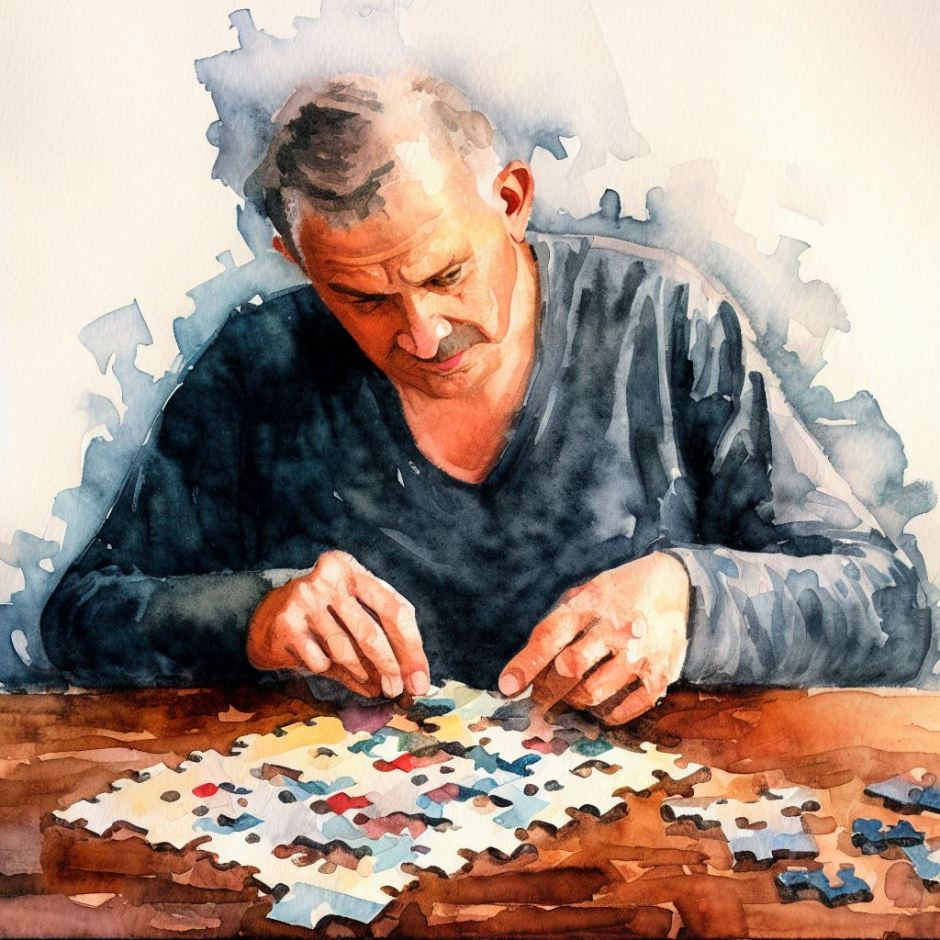
Every author and every artist has a method. I called mine dissectology—derived from dissectologist, that is, someone enjoying jigsaw puzzle assembly—because the way I worked with words was like putting together a jigsaw puzzle with one fundamental difference—each piece of the puzzle came from a different box.

How did it look in practice? Every time, while reading, watching a film, or having a conversation, I came across a word or phrase that resonated with me—or, as I called it, sounded delicious—I wrote it down in my notebook. Sometimes it took a while, but eventually I had enough material to start playing with it.

At first, it looked like a pile of random words, but my mind quickly started combining them into phrases, then sentences, and at last, there it was—a new poem. Sounds simple, right? But it’s not. Although this is an exception, writing a certain poem took me nine months and required researching the life and work of Martin Heidegger. I joked later that it had been a busy pregnancy with a difficult labour.

And here is the thing: at some point, I felt like a fraud. I wasn’t a creator, but a mere puzzle assembler. True, with a bit of creativity, but in the end, there was no point that I had in mind that I tried to convey with my words—well, not always, as sometimes I actually wanted to say something in particular, but this was the exception, not the norm. Socrates’ words about poets truly reflect the nature of my little play.

Journal (To say something profound)

As you desperately try to say something profound, with age, you discover that whatever it is you always wanted to say, someone has already said it, but without your stuttering and with a much better vocabulary. All that remains is to relish the words, pretending not to notice the hint of bitterness in the aftertaste. After all, you are not without a role; you are a diapason that resonates with their sound. Without you, they would disappear into the void.

Journal (Bright but lazy)

My education is quite a complicated story. Bright but lazy was the general opinion teachers had about me when I was still in primary school. It’s not that I couldn’t have done more in terms of my academic achievements—I learned all of seventh-grade maths in one weekend to prepare for the end-of-year exam, scoring better than the model student in our class—but it just never really interested me. I preferred to immerse myself in the world of literature. At that time, reading books bordered on obsession. The book was the first thing I took in my hands after waking up. I ate while reading, I walked to school with a book in front of my face (I’m still surprised I was never hit by a car), and in class I read with a book on my lap under the desk so the teacher wouldn’t catch me. Books filled the rest of my day after school, and when my parents finally turned off the light in the middle of the night, I stood behind the curtain and read by the light of the street lamp in front of my room window.

This situation continued throughout my entire education, abruptly interrupted when I failed one of my final exams, and instead of going to university to study philosophy, I ended up in the army. I passed the exams eventually after quitting the army, but at that time, the reality of adult life hit, and I had to find a job.

A few years later, after saving some money, I started a part-time study at Jagiellonian University, the oldest and one of the best universities in the country. I studied the cultures of ancient Rome and Greece, but after a year, my finances did not allow me to continue. My father lent me some money, but this time I decided to be more practical and switched to political science with journalism at my local university. It made more sense because, at that time, I was already working for the largest daily newspaper in the region, and half of my colleagues were studying there. Unfortunately, I devote more attention to work than to studies, and I failed the year. And that was it. Only a few years later, I returned to Jagiellonian University to study comparative literature as an aspiring poet, but again, it turned out to be just another one-year stint.

It required hitting the brutal reality of immigrant life and six years of hard work studying while in a full-time job for me to actually get a university degree. But even that wasn’t without some turmoil, as I started in mathematics and statistics just to switch after two years to computer science. But in the end, I finished it. The odd thing is, it stopped having any meaning for me. Perhaps because it happened at the same time as the breakdown of my marriage. But that’s a different story.

Journal (Tsundoku)

Why do we collect books? For reading, obviously, but sometimes also to compensate for a sense of intellectual inferiority. There is strength in numbers; quantity uplifts, at least until someone pops that balloon by asking how many of them you’ve actually read.

Back in Poland, as a journalist, I was around well-educated people, and although no one ever asked me about it, my HNC equivalent was no match for their masters and PhDs. It may sound silly, but it was a well-hidden thorn in my soul, especially since I could only blame myself—switching between universities, moving from one field of study to another to complete nothing in the end—pure me. Of course, not all of this madness was in vain. Like a true Renaissance man, I could hold a conversation with almost anyone, and this helped me a lot in my journalistic work. But despite this, I couldn’t shake the feeling of inferiority of a provincial boy that I was.

And this is where obsessive collecting came to the rescue. It took me many years, but I had acquired quite a large collection of books, and I was proud to see the admiration on the guests’ faces as they looked around the room that looked more like a library than a living room. It wasn’t like rich people bought entire collections of books just for decorative purposes. I actually read at least some of the books I had. Besides, a large part of my collection consisted of various dictionaries and encyclopaedias—there were no smartphones back then and the Internet was still a novelty—which I used for work and when writing poetry. However, I’d be lying if I denied that this show-up part had no significance.

The most tragic thing about all this was that I had to leave all these books in Poland. It would cost me a fortune to get them to Scotland. But after seventeen years here, I’m slowly building a new collection, although this time I try not to overdo it and, of course, to read them regularly, but the ratio of books read to unread is still not the best. It seems that the Japanese term tsundoku is still closer to the truth than not in my case.

Journal (Flies)

It’s only a little after three in the morning, and I can’t sleep. I woke up to answer nature’s call and then went into the kitchen to take a sip of water, and that’s when I saw it—a big fat fly on the door of the wall cabinet. I immediately took the slipper off my foot and killed it. Except now I’m annoyed and can’t sleep because it looks like it’s a repeat of what happened five weeks ago. Back then, I had a huge infestation of flies for over a week. They entered my apartment through the ventilation system. It was a real nightmare. I was killing about twenty or thirty a day. I have no idea where they came from, but considering that the ground floor apartment looks like a garbage dump, which I saw several times when I passed by the wide open entrance door, maybe the source is there. And just as suddenly as they appeared, they also disappeared. I thought it was over, but yesterday they started appearing again. In a much smaller number, but still.

The biggest problem with flies is that I can’t prepare my flatbread, which needs to cool before I can put it in the fridge for storage. I normally make a whole stack in the evening and leave it on a plate on the table overnight, so in the morning I can wrap it all in cling film and put it in the fridge. With those bloody insects flying around, that’s impossible. Perhaps it’s time to consider moving. I’ve been living here for over a year, and I’ve had to deal with various things, but the fly infestation is just too much. However, the rent is relatively low, and it is one of the few areas in the city covered with high-speed fibre-optic broadband, which I need for my work. And I hate moving. It’s such a hassle.

Journal (Diary is my Bible)

I watched A Single Man this afternoon. I’ve seen this film so many times that I’ve lost count. I have a habit of watching films that make an exceptionally great impression on me over and over again, sometimes even several times a day if time allows. This was the case, for example, with Mr. Nobody, directed by Jaco Van Dormael, which, by the way, wasn’t the only film of his that I liked so much—The Brand New Testament also received its fair share of my time. Another one is Columbus, Kogonada’s directorial debut, a new discovery that I still relish. But this doesn’t just apply to relatively new films. For example, Billy Wilder’s The Apartment is also on my list.

When I think about it, there is no denying that I am a film buff. However, I can’t think of many books to which I have returned often. While still a teenager, I had a period when I read Honoré de Balzac’s Father Goriot several times—by the way, one of only a few books that made me cry. Of course, I had my favourite authors, and I read almost everything they wrote—Fyodor Dostoyevsky and Saul Bellow, to name just two—but the book that is always at my fingertips is Witold Gombrowicz’s Diary. Strangely enough, apart from Diary, of all he wrote, I have only read Ferdydurke and Trans-Atlantyk, and neither of these two made any significant impression on me. Don’t get me wrong, they weren’t bad; I just don’t feel like I would have missed out if I hadn’t read them, while Diary is my Bible.

Journal (My life is my story)

As of today, I have decided to stop writing poetry. To tell the truth, I’ve been planning to do this for quite some time now. And no, I am not aping Rimbaud, whose level, by the way, I am not even remotely close to. I simply feel like a fraud with a fig leaf of a quote from Apology, where Socrates said that “not by wisdom do poets write poetry, but by a sort of genius and inspiration; they are like diviners or soothsayers who also say many fine things, but do not understand the meaning of them.” And even if I manage to write something decent from time to time, most of my literary output is mediocre at best. It’s true that I had my moment when I was still writing in Polish and a series of my poems were published in one of the most important literary magazines in Poland, but this is ancient history now.

I stopped writing in Polish, and what’s more, I even stopped reading in my mother tongue. It was not a whim but a conscious decision to motivate myself to dive deeper into the language and culture of my new homeland instead of closing myself in a ghetto like many of my compatriots in emigration. By the way, I still feel a tinge of embarrassment when I remember the sight of satellite dishes mounted on kitchen walls near the wide open windows in the apartments of Polish emigrants to receive Polish TV because mounting satellite dishes on the outer walls of skyscrapers was prohibited for security reasons. If anything, it was the end of a bloody November, and believe me, that’s not fun on the Scottish coast. I can’t even imagine how cold it must have been in those apartments.

So, instead of waiting for another divine inspiration, I decided to start writing a journal, partly because my attempts at writing novels had failed since they were always nothing but a flash in the pan—I’m working on that—and also because of a lack of ideas for interesting stories. A journal definitely sorts the latter problem out—my life is my story. Moreover, the masterpiece of my favourite writer, Witold Gombrowicz, is his diary, which, by the way, I have in the original and in English translation, and I regularly return to both. So why not follow my master’s example, even if my chances of writing anything worth publishing are rather slim?