Britishness under the AI microscope

‘How very British to count days or lamp posts’ might seem like such an innocent statement that no one would suspect it to be a practical joke—yet that is exactly what it was, and it was played on none other than Google’s AI. No wonder it fell for it and produced some rather bizarre cultural insights:

The idea of counting days or lamp posts, while not exclusively British, can be seen as a quirky, slightly obsessive, and perhaps endearing trait associated with British culture. This can be linked to a love of routine, attention to detail, and a certain dry humor.

Here’s why this might be considered “very British”:

Emphasis on Routine and Order:
A structured approach to life, including counting things, can be seen as a way to impose order and predictability in a potentially chaotic world.

Love of Detail:
British culture often appreciates the subtle nuances and details of everyday life, and counting things like lamp posts could be a way of engaging with these details.

Dry Humor:
A self-deprecating and understated sense of humor is also a British trait. Counting lamp posts could be seen as a form of dry, slightly absurd humor, where the activity itself is the joke.

Regional Differences:
Some areas of the UK might have more of a tradition of counting lamp posts than others, possibly influenced by local infrastructure or community practices.

Historical Context:
Historically, lamp posts were essential for navigation and safety in towns and cities, and counting them might have had a practical purpose in the past.

In essence, while not a universally accepted British custom, the idea of counting lamp posts can be seen as a humorous and slightly quirky expression of a few common British traits.


More words to ponder at maciejmodzelewski.com

Perpetuum mobile

I can’t remember if I ever wanted to say something in particular, if my words had any intended purpose, at least not since the very beginning, when the first verse coincided with the end of puberty and was meant to impress a girl. It did not. I wonder what she’d say now—not that it would matter, and her face has been lost to the mists of time anyway. Perhaps that’s what always drew me to what Socrates said about poets in the ‘Apology’. At least, after more than three decades, my writing—although not a perpetuum mobile—is as close to self-perpetuating as one gets.


More words to ponder at maciejmodzelewski.com

Leave me alone!

Once upon a time, as a young journalist in post-communist Poland, I regarded the BBC as the golden standard of journalistic independence and professionalism. So you can imagine my disappointment when, after emigrating to the UK and making Scotland my new home, I realised that nothing could be further from the truth—the emperor-is-naked moment being the 2014 Scottish independence referendum. For that reason, among others, I don’t have a telly, and I don’t need a TV licence. And yet that wretched body keeps nagging me over and over again to buy one. There’s no way in hell I’ll ever do that, so stop distracting me from reading Lytton Strachey by the window. Actually, here is a thought: why not invent a licence for the window view? But know that—though for some reason I am eagerly awaiting the linden tree to bloom, as if the scent of the blossoms could exorcise the exhaust fumes—I’d rather draw the curtains than pay you a penny. Of course, you could always make bookshelves taxable by length or, better yet, charge a word fee, though in that case, I’m not so concerned: I don’t talk much, and my writing is usually concise.


More words to ponder at maciejmodzelewski.com

Conversations

I find reading The Letters of Lytton Strachey a great deal of pleasure, and yet it is like listening to a telephone conversation where all you can hear is the man standing in front of you with the receiver in his hand. For that reason, I look back on reading the correspondence between Stanisław Lem and Sławomir Mrożek with all the more nostalgia. It has been a solid ten years since I last held this voluminous tome in my hands. Perhaps it’s time to return once again to their wit and wisdom.


More words to ponder at maciejmodzelewski.com

There may be maybe in the sure

Me: There may be maybe in the sure

Google AI: The phrase “There may be maybe in the sure” is a grammatically incorrect and nonsensical statement. The words “may be” and “maybe” are distinct and have different grammatical functions. “May be” is a verb phrase, while “maybe” is an adverb. The sentence attempts to combine them in a way that does not make logical sense.

Me: 🤣 🤣 🤣


More words to ponder at maciejmodzelewski.com
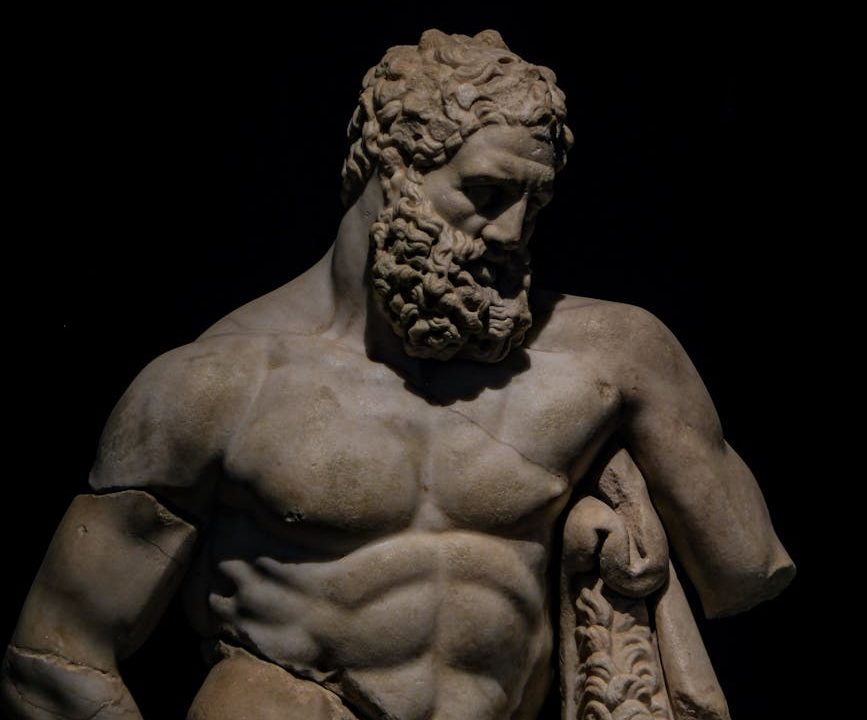
Herodotus is turning in his grave!

I recently came across two rather peculiar terms: mythic history and fictive history. Although I’m not a historian myself, if I were, I’d feel somewhat uncomfortable, to say the least. After all, the word history comes from the Ancient Greek term ἵστωρ (histōr), meaning ‘learnt, wise man’—not from φήμη (phḗmē), that is, ‘prophetic voice, oracle, rumour’. What’s next—deterministic poetry?


More words to ponder at maciejmodzelewski.com

The power of voice

When it comes to English actors, two names always come to mind: Hugh Grant and Colin Firth—mainly because of their voices. The former caught my attention back in the nineties—Four Weddings and a Funeral, of course—with his light, slightly soft voice, often carrying a hesitant rhythm. That West London accent, touched with an informal edge, became an instant embodiment of Englishness. Over the years, though, that flavour has lost its charm; now it actually annoys me to a degree.

The latter is another story entirely. For a long time I somehow managed to miss Firth and can’t recall him at all until I watched his Oscar-nominated role of a grieving gay man in the romantic drama A Single Man. What a delight. That controlled, calm and authoritative tone that lends gravitas and elegance while conveying the underlying despair and tragedy of loss—no wonder his accent is often seen as the epitome of refined British upper-class speech. But what struck me the most is that I find Firth’s voice magnetic regardless of whether I watch Mothering Sunday or Wings of Fame. That probably says more about me than either of these two actors.


More words to ponder at maciejmodzelewski.com

The visit

Spending half the night in a reclining garden chair in the living room isn’t much, but I doubt you could call it sleep deprivation. I did, however, notice an unusual state of euphoria that might suggest my brain is starting to release extra dopamine to compensate for the fatigue, which makes me feel strangely energetic—it’s not even noon yet, and I’ve already written four poems—which is often followed by a crash. I’m so not looking forward to that. The visit was fun, though.


More words to ponder at maciejmodzelewski.com

The bibliophile’s sin

Books have been at the centre of my life since I was ten and recognised the library as my temple, but it was only as an adult that I realised that my bibliotheca had become a well-curated dichotomy between what I buy and what I read—Japanese call it tsundoku.


More words to ponder at maciejmodzelewski.com