The Bench Outside the Cemetery

Some time ago, I asked LLaMA AI to write an essay on my poem The Perfect End. The result was two distinct texts: one reflective and informal, the other academic in tone. Both took the poem seriously—perhaps more seriously than I expected. It gave me an idea: what if I invited other AIs to join the conversation?

Below is a third essay, written by ChatGPT. It offers yet another perspective—less academic than the second, but perhaps a bit more lyrical in its reading. I’m publishing these not to prove any point, but to see what happens when human ambiguity meets machine interpretation.

You’ll find the original poem here, and the first two AI-generated essays here and here.


The Bench Outside the Cemetery: On Maciej Modzelewski’s “The Perfect End”

In his poem The Perfect End, Maciej Modzelewski imagines a quiet kind of extinction—not grand, not mourned, not mythologized. Just a man, a cottage, a cemetery nearby, and the alphabet ticking softly in the background.

How convenient would it be to live in a cottage
next to a cemetery?

So begins the poem, not with drama, but with dry speculation. There’s something gently heretical about the question. It suggests proximity to death—not as threat, but as a kind of ease. The speaker isn’t interested in death as spectacle. They’re more concerned with the terms of proximity: where to live, what matters, and how to reject the “ghastly conventionalities of days of yore” that so often drape the dead in someone else’s idea of dignity.

Modzelewski’s voice is crisp, unsentimental, and wry. The poem operates like a quiet refusal. Refusal of legacy, of solemn ritual, of meaning carved into stone. Instead, it offers something else: the possibility of existing without spectacle, without performance—even at the threshold of nonexistence.

you should never deny yourself
the simple pleasure of inadequacy…

This is the hinge of the poem, and its most dangerous idea. The simple pleasure of inadequacy is not self-pitying. It’s not defeatist. It’s almost celebratory. It rejects the modern obsession with impact, relevance, legacy. The speaker doesn’t seek greatness. They seek something smaller, softer, maybe even more honest: the comfort of having nothing to prove.

The most haunting image arrives near the end:

just because a bench plaque
would be the only befitting abridgement of your meagre existence
after wandering through life at the speed of the alphabet.

Here, the poem pulls back the curtain on the whole edifice of legacy. What remains? A bench. A plaque. Perhaps a name, unread. The final line—“at the speed of the alphabet”—is as close to a metaphysical shrug as language allows. Life is not a crescendo. It’s a sequence. Letter after letter. Not meaningless, but never monumental.

What Modzelewski achieves in just seven lines is a distilled rejection of our culture’s death-fantasies. No blaze of glory, no tragic climax, no need for the last word. Just a life lived adjacent to endings, quietly, as if to say: even the unremembered have their place.


More words to ponder at maciejmodzelewski.com

The day I woke up

I woke up this morning feeling like it was Sunday, only to realise that it was just Tuesday. At least it wasn’t Monday, one might say—or was it? But here’s the rub—the seven-day week is complete nonsense. It turns out the Babylonians are to blame, specifically King Sargon I of Akkad. The story in Genesis of God resting on the seventh day reinforced this even more, although, for example, the Egyptians had a ten-day week and the Romans originally settled for eight days (nundinal). But when you think about it, the only truly universal measurements of time are the time of day, that is, day and night, and the years because the seasons repeat. Even the seasons themselves are more of a regional fair. While areas in the mid-latitudes experience spring, summer, autumn, and winter, other regions have different seasonal patterns, like a wet (monsoon) season and a dry season near the equator. So I decided to completely abandon the idea of a week and the names of days associated with it and use only two—Myday and Theirday. Unfortunately, the latter prevails.


More words to ponder at maciejmodzelewski.com

The thrills of youth

Of all the creatures big and small, there are two that I actually quite like—magpies and slipper animalcules. The former for the good neighbourly relations we have, the latter because of a poem—but I suspect you may not know Andrzej Bursa—that once gave me the unique opportunity to say ‘motherfucker’ out loud in class without any undesirable consequences. The thrills of youth—where have you gone?


More words to ponder at maciejmodzelewski.com

Human connection

If I so desperately yearn for human connection, where does that constant trepidation come from every time I have to meet an actual living human being? Why do people seem to be so much more captivating in their refined, textual form? Is it because books don’t exhibit annoying habits or have foul breath, or is it all down to my own shortcomings that I try to hide?


More words to ponder at maciejmodzelewski.com

A bookless library

Have you ever heard of a library without books? I haven’t—at least until now—but apparently such a thing actually exists. And while I could understand the appeal to some extent, it seems to me that it is something akin to a vegan steak—edible, perhaps somewhat filling, yet still lacking a few essentials. Maybe it’s a hint of nostalgia, but I still remember when, as a youngster, I would go to the local library, stand between the shelves and, with my eyes closed, randomly pull out a book. You can’t imagine how many treasures I discovered that way. Besides, my objection most likely comes from the fact that it seems like another step towards eliminating the traditional book, because although their electronic replacements have their advantages, they are still far from surpassing the paper ones. Take the 1969 Faber and Faber edition of The Complete Poems and Plays of T.S. Eliot in your hand (which I happen to have on my desk right now), and you will understand.


More words to ponder at maciejmodzelewski.com

The half-century mark

It puts me in a rather peculiar position when—rather than, considering my age, courting a preposterous dowager—I yearn for the creamy scent of a perfectly ripe banana, the inconsequential beauty of unwitting lasciviousness—even if one exhibits something as mundanely inappropriate as picking one’s nose, so it is impossible not to call one a perfect scandal—a sun-drenched firmament of tiny freckles, and more. I can’t wait to see how ridiculous I will be in ten years when I’m sixty.


More words to ponder at maciejmodzelewski.com

Not quite family

After spending the greater part of my adult life in Scotland, I’m starting to wonder who I really am, because—technically a Pole—not only am I not visiting the old country, but I have even stopped using my mother tongue, since there aren’t very many opportunities for it, and English has now become not only my spoken and written language, but I even think in it. To be frank, I no longer know or care what happens in Poland, and if it were not for the passport I have to renew every ten years, I doubt I would pay more attention to the place than I do to the Solomon Islands. However, I can’t really call myself Scottish, or British for that matter, as I have never really applied for citizenship, mainly because I would have to swear allegiance to the current monarch and his heirs and successors, a thought that burns my republican soul like hellfire. So, I live my little life as an emigrant—a state of mind akin to that of a poor distant relative living in a spare room—if I may allow myself such an analogy—a household member, but not quite family.


More words to ponder at maciejmodzelewski.com
There is still something

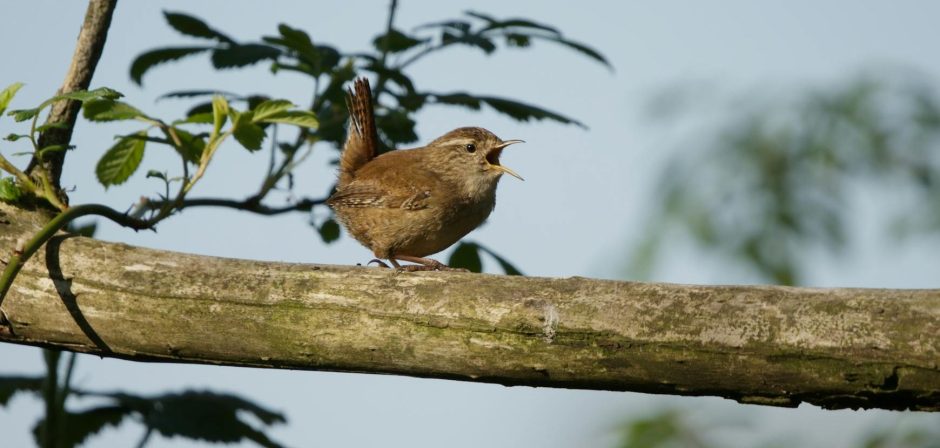
From the shaded seclusion of a park bench, I pondered the wind’s indifference to flannels running between the wickets, almost equal to the blasé of the strollers sauntering along the paths around the lawn. This nonchalance stayed with me on the way back home, when I briefly kept up with the kayaking foursomes training on the Dee while listening to the song of wrens as they tried to be heard over the traffic. I guess, even if the nature of love has been hidden from me, there is still something to fill the void.


More words to ponder at maciejmodzelewski.com

I am who I am

Each and every one of us likes to think that we are unique in our special way, but at the end of the day, there is always a Darwin or a Wallace who will find a pigeonhole for us in the taxonomy. If I had to characterise myself, it might be something like this:

  • Domain: Vocabulia (the users of words as opposed to Pugnia, who would rather use their fists)
  • Kingdom: Eloquentia (the effective users of language as opposed to Prolizi, that is, word wasters)
  • Phylum: Creatores (rather self-explanatory, as is the opposition: Interpretes)
  • Class: Scriptores (basically, writers vs. Oratores, that is, speakers)
  • Order: Poetae (poets, obviously, with Prosatores, prose writers, standing on the other side of the fence)
  • Family: Matutinae (who write in the morning, unlike Noctilucidae, who prefer the darkness of the night)
  • Tribe: Puristae (pure like the glass of water on their desk vs. Stimulantes, who can’t write a line without at least a sniff of coffee and cigarettes)
  • Genus: Hedonici (writing for eternal pleasure as opposed to Pecuniarii Pii, who write for money, but only from a pious source)
  • Species: Poeta Purus Hedonicus (I’d like to believe it’ll be me while I keep the copy of Stanley and Danko under my bed)

More words to ponder at maciejmodzelewski.com