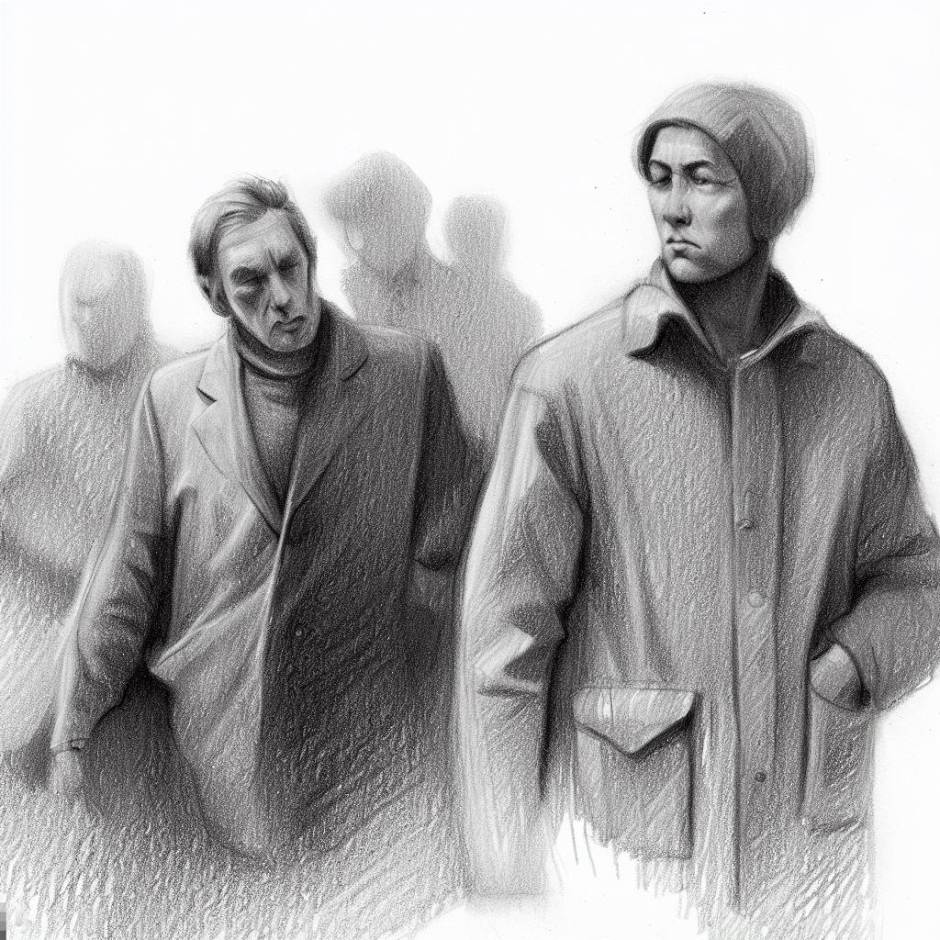
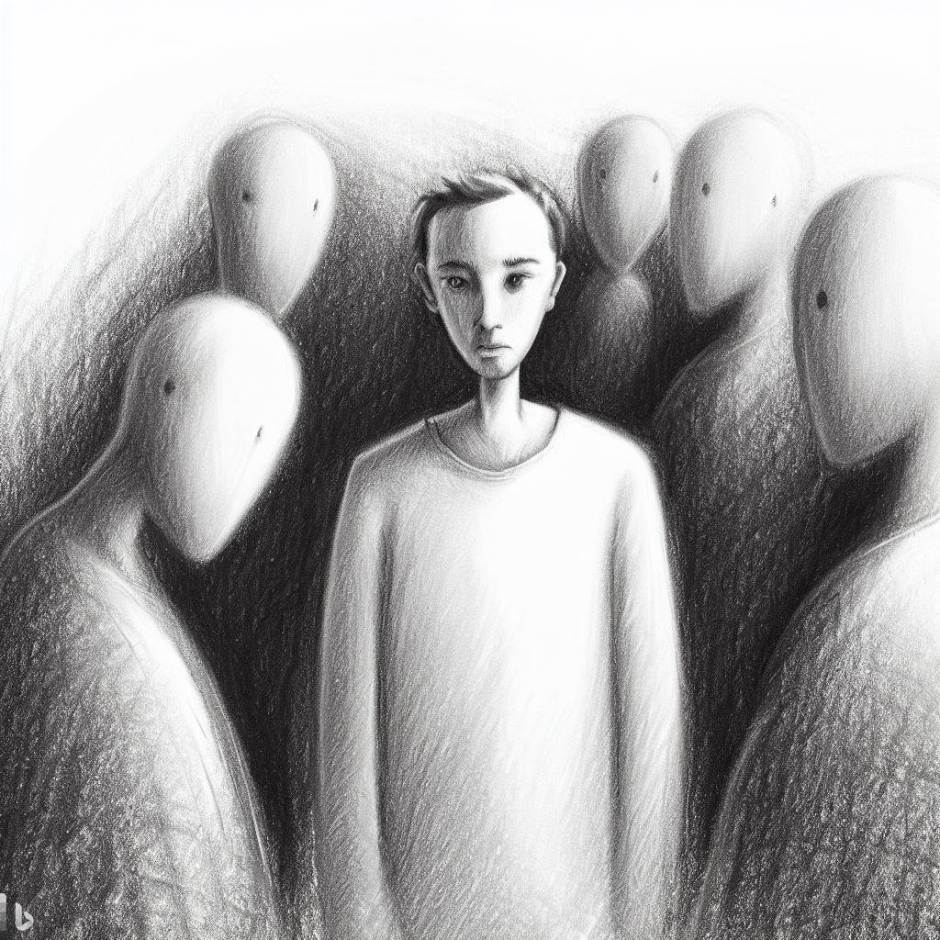
I have always liked phone books, but no one makes them any more. They were like bare graveyards
where each tombstone provided the necessary facts of life, only in their case, they were supposedly
about the living. I remember trying to convince myself that everyone there was waiting for me, even
if they were not, which was a fact of life of a sort, but I still tried to find an excuse for being naive.
I thought: if the world around me does not exist for me, what is the point? It hurt, but I kept telling
myself that it was going to be easier when I grew up. Now I am grown up, and it hurts even more.
And on that note, it is time for dinner. Like it or not, the body needs fuel more than anything else.
This is the ultimate fact of life.
Category: poetry
Here are my poems in English and Polish.
Funny thing
It is easy to be in love in a poem because the object of your affection does not snore
or have bad breath, or for that matter, any of the myriad little things that annoy the hell
out of you. It is easy to be in love in real life too, because even if it happens that Romeo
or Juliet of yours farts at the table during a romantic date, the hormonal cocktail flooding
your brain will make you see nothing but that cute blush of embarrassment. But the same
blush twenty years later, if it happens at all, will test your patience one too many times.
Funny thing—love—a tipsy bookkeeper on leave.
The bouquet I seek
I am attracted to redheads with freckles, perhaps because the very first woman I noticed,
signalling that I had finally reached my awkward age, was one. Neither beautiful nor ugly,
she was the epitome of perfection, and all I wished for was to push her on a garden swing.
Decades later, I know it was bizarre to wait for a nod to follow her long silk nightdress.
If only she knew I seek a home—not a hotel room, now and then—where the bouquet
on the table is a humble cauliflower.
Trapped in the boundaries
As I lend this body to this mind, the question arises: what defines me?
Perhaps I am whatever will remain once we have basically established
what I am not. This, however, leaves us with two sets, which are likely
to expand ad infinitum, and as such, they might not necessarily be equal
in their implications.
Love actually
For love, we do crazy things. For love, we change the world—or at least try to.
All that for something we cannot even clearly define, despite millennia of effort
and a plethora of adjectives added to it. The brutal truth is that Romeo and Juliet
were nothing more than oxytocin junkies (to be accurate, it is a whole cocktail
of chemicals, but you get the picture). So excuse me, but if you asked for my take
on the subject, I would say, love is the white whale in an ocean of chemically
induced despair. And yet, for one more shot at it, I will give up anything,
or something like that.
My somewhat mundane reason for writing poetry
It all starts with a word or a phrase that turns into a paragraph,
and only then is it divided into verses and stanzas, if needed.
At least, that is my approach to writing a poem. The particulars
for sure vary from one author to another, but the whole process
has one thing in common: it is a trial-and-error-ridden fight
for immortality—pointless if you ask me, although I still take
part in this rite anyway, mostly in the hope of a breakfast
at Tiffany’s.
The poet’s choice of colours
I am a poet, a born grandstander, trained in the pageantry
of baring the soul. And don’t be fooled; the events of my life
might be the raw material, but it takes a great deal of fancy
to spill out a verse. Although, remember, even a stage death
requires the true colour of blood.
I will save it to show you
I chipped a plate today, and as insignificant as it might seem, it somehow saddened me.
I have had it for sixteen years, and it has survived in mint condition through daily use,
three home moves, and a breakup. And yet, one moment of inattention was all it took.
So I guess it may no longer be of use to serve my guests, but I will save it to show you
that having a past does not rule out a future—one day, when we meet.
A lingua franca
My kids’ language is not my mother tongue.
My mother tongue is no longer a language
of mine. My everyday language bewilders
everyone else. Perhaps we all speak fluent
stranger.