Journal (Never lonely)

Reading, generally speaking, is a solitary endeavour, and apart from an occasional marginalia or folded page corner, there is very little that connects you with other readers—nothing beyond the awareness that other lonely souls have also touched these pages. Or so you might think.

Although I love the unique sensation of touching paper, I also appreciate the new opportunities offered by modern technology. For example, my e-book reader displays highlights made by other readers along with information about how many of them found the particular fragment important—the following quote, for instance, has been highlighted fifty-one times: “So it seems that the soul, being transported and discomposed, turns its violence upon itself, if not supplied with something to oppose it, and therefore always requires an object at which to aim, and whereon to act.” (from The Essays of Montaigne—Volume 02 by Michel de Montaigne, in translation of Charles Cotton)

And just like that, I know that there are fifty-one kindred spirits somewhere with whom I can connect in thought. So perhaps when you read, you are alone. But never lonely.

Journal (A naked body)

If there’s anything more tedious than a naked body, it’s a documentary about showing it off, and yet here I am, watching one, or at least trying to. But as I wrote the opening sentence, I gave up on the film and decided to read a little about the perception of and attitude towards the body in antiquity, and more specifically in ancient Greece and Rome, instead. I found an interesting series of articles on the subject titled The Body as an Idea in Ancient Greece 101 by Eugenia Ivanova, and I’m already halfway through, but it’s getting late, so I will finish it tomorrow. It’s time to take my naked body to the shower and to bed.

Journal (The Power of Taste)

Dictators and regimes don’t like distinctive faces. They prey on the inertia of the idle crowd in the background of their own angry countenances, or let’s call them what they really are—ugly phizzes. When I read today about the Iranian regime targeting Iranian activists across Europe with threats and harassment, the first thing that came to mind was a poem by my compatriot, one of the greatest Polish poets, Zbigniew Herbert, titled The Power of Taste (subtitled recording of the poet reading his poem himself). For many, his words were a compass, helping them survive the communist regime in Poland.

The Power of Taste

For Professor Izydora Dąmbska

It didn’t require much character at all
our refusal disagreement and stubbornness
we had a modicum of necessary courage
but ultimately it was a matter of taste
Yes a taste
that contains the fibres of the soul and the cartilage of the conscience

Who knows if we had been tempted better and more beautifully
they would have sent us women pink flat as a wafer
or fantastic creations from the paintings of Hieronymus Bosch
but hell at that time was what
a wet pit an alley of murderers a barrack
called the Palace of Justice
rotgutted Mephisto in Lenin’s jacket
sent Aurora’s grandchildren into the field
boys with potato faces
and very ugly girls with red hands

Indeed their rhetoric was too clumsy
Marcus Tullius was turning in his grave
chains of tautologies a few concepts like flails
dialectic of torturers no distinction in reasoning
syntax devoid of the beauty of conjunctive

So aesthetics can be helpful in life
the study of beauty should not be neglected
Before we declare our accession we must carefully study
the shape of the architecture the rhythm of drums and fifes
the official colours the nefarious ritual of funerals

Our eyes and ears refused to listen
the princes of our senses chose proud exile

It didn’t require much character at all
we had a modicum of requisite courage
but it was basically a matter of taste
Yes a taste
that tells you to leave grimace drawl the sneer
even if it means losing a priceless capital of your body
your head

Journal (Every little counts)

Our modern life is an endless pursuit of new things, but does it really make us happy? Doesn’t the familiar give us a sense of comfort, perhaps even the safety of the mother’s womb? Even when it comes to enemies, the old one is better than the new one, because at least we already know all their tricks. By the way, it reminds me of dialogue from one of the best Polish comedies of all time, Sami swoi (Our Folks), the story of two hostile neighbourly families—the Karguls and the Pawlaks—who meet again in a new place after World War II.

Kazimierz Pawlak (head of the family): Why did you hang your noses like that? If our own people live here, we can live here too.
Leonia Pawlak (his mother): Our own?! Kargul is the worst enemy of all!
Kazimierz Pawlak: Enemy? True, the enemy! But yours, mine, ours—bred on our own blood!
Mania Pawlakowa (his wife): And you couldn’t go anywhere else, ha?
Kazimierz Pawlak: Oh Mania, don’t be nervous; why did we have to look for a new enemy when the old one appeared sideways, ha? Well, that wouldn’t be God’s way.

Of course, I am aware that modern capitalism is based on this endless hunger for the new, and if anything changed, the entire system would collapse like a house of cards. But on the other hand, something has to change because neither we nor our planet will survive the current situation.

My personal life philosophy is based on minimalism in the sphere of needs while using what is given to me to the fullest. Perhaps it is easier for me to live this way because, since I was a child, I have lived in the world of my imagination and the books that nourished it. I don’t feel the need to bask in the sun on the beaches of the Riviera (actually, I would hate it because I don’t tolerate sunny weather very well, and summer has always been the hardest season for me to survive) or touch historic stones (in fact, the sweat from our hands damages them). I don’t have a car because I try to walk everywhere, and when I need to go somewhere further, I use public transport. And there are many other things in my life like this.

It is true that sometimes it’s inconvenient, but it’s a small price to pay for knowing that I’m doing something for the environment. As they say, every little counts.

Journal (The forgotten art of writing letters)

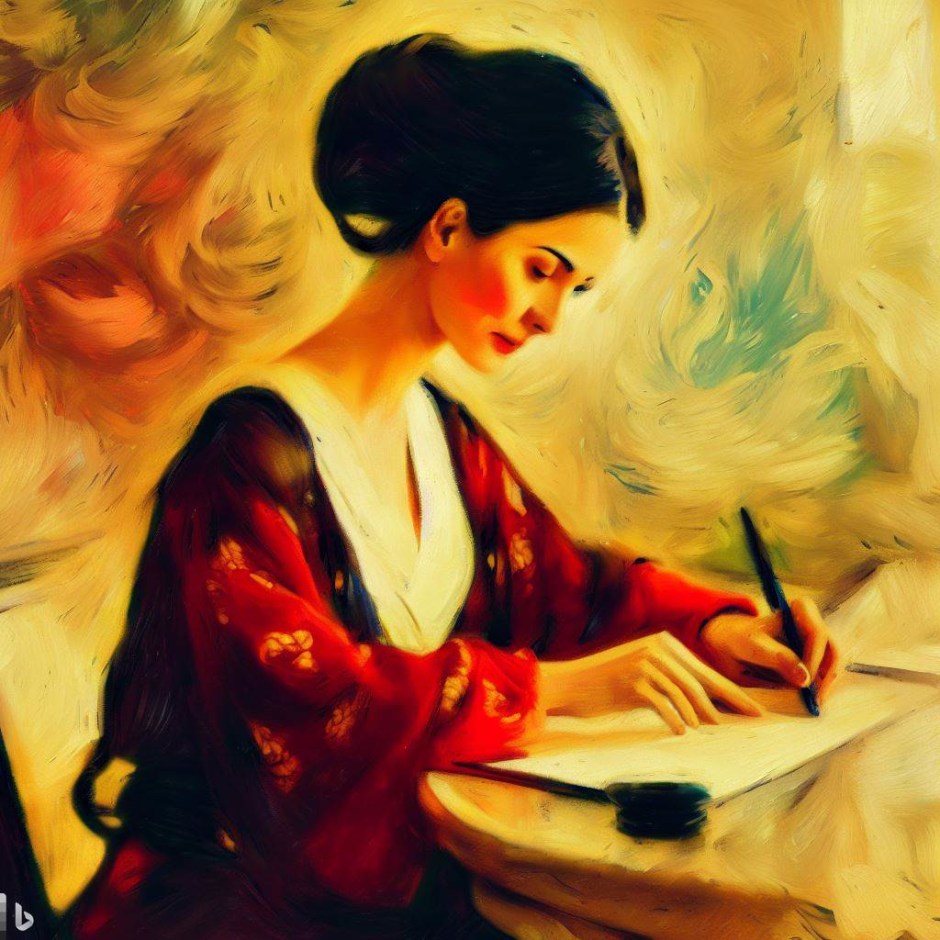
I miss the mostly forgotten art of writing letters. For centuries, millennia really, epistolography was at the heart of our social life, with letters as one of the means of communication helping maintain relationships and exchange thoughts and ideas, but now the only letters most of us are receiving are notices from the government—even utility bills and bank statements arrive electronically, which is actually a good thing considering the environmental impact—and perhaps Christmas cards. Nowadays, it’s not even email that has taken over, but all kinds of instant messengers on our mobile phones and social networking sites. This fragmented, casual, surface-level communication negatively impacts our ability to formulate more complex thoughts. And, by the way, our reading habits don’t help either.

I just looked at the clock on my dresser and realised it took me an hour to write this paragraph. What happened to me? Why am I so distracted? After all, for years, writing was my daily bread because I earned my living as a journalist. And now this! I really hope this journal will help prevent further degradation.

Journal (Forgive me)

I envy Étienne de La Boétie. Not only was he himself a man of many virtues, but he was also endowed with a great friendship, which lasted long after his untimely death, with another great Frenchman, Michel de Montaigne. Reading Montaigne’s letters published in William Carew Hazilitt’s 1877 edition of the Essays is moving proof of this.

I have always been touched by friendship, something I’ve never really experienced myself. I remember how fascinated I was reading the correspondence between Stanisław Lem and Sławomir Mrożek, or by the traces of friendship with Jerzy Giedroyć that I found in Witold Gombrowicz’s Diary (it turns out that their letters were also published—the book is certainly worth reading, so I have to add it to my list).

Unfortunately, the one time I had a chance for this type of connection, I ruined it due to my own artificiality of style. No sane person would agree to correspondence clearly conducted with publication in mind. I don’t even know what I was thinking then. This was back when online literary forums were popular. At one of them, I met someone who was a kindred spirit and also a literary scholar. He appreciated my poetry, and when I wrote a satirical drama, he simply loved it. After the forum was closed down, we kept in touch via e-mail, but when, after reading Mrożek’s and Lem’s letters, I started my strange styling, he fell silent. I regretted it, but the damage was done. I guess I wasn’t ready for a real connection with another human being—it was all just a stage play. Stupid really.

We have this saying in my native language: A Pole is wise after the damage. It’s a pity that the damage is required. What can I say other than forgive me, Piotr?

Journal (Dissectology)

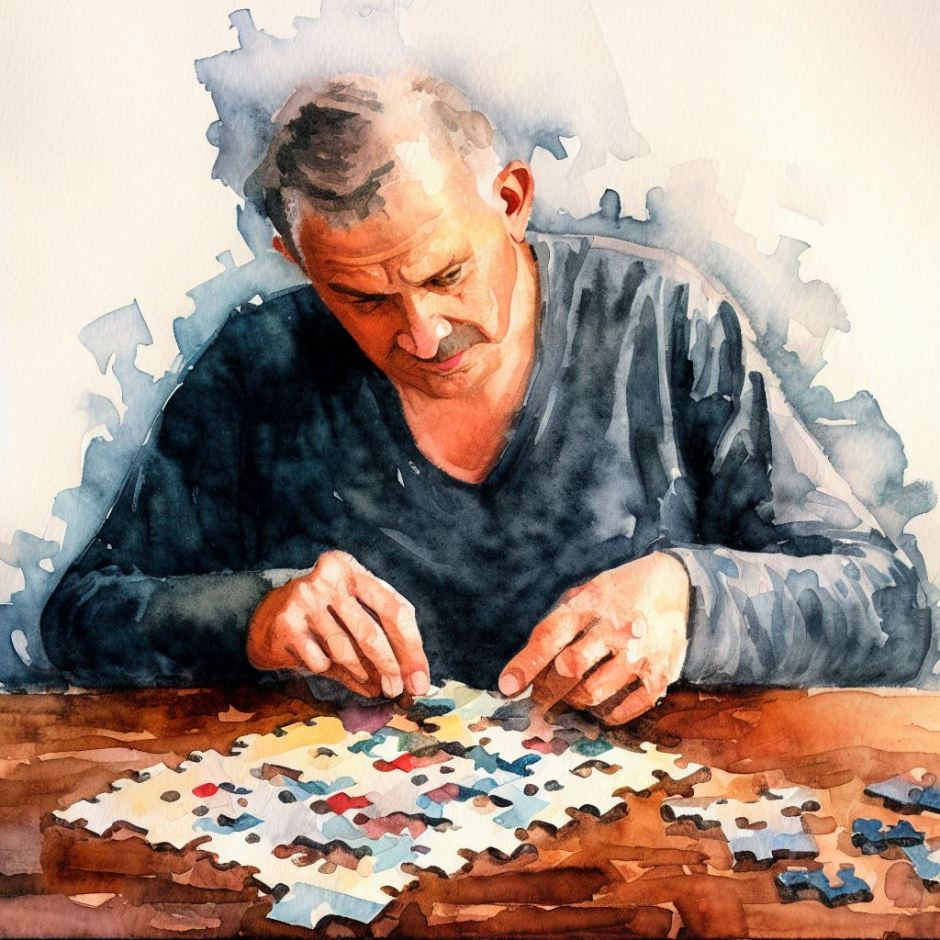
Every author and every artist has a method. I called mine dissectology—derived from dissectologist, that is, someone enjoying jigsaw puzzle assembly—because the way I worked with words was like putting together a jigsaw puzzle with one fundamental difference—each piece of the puzzle came from a different box.

How did it look in practice? Every time, while reading, watching a film, or having a conversation, I came across a word or phrase that resonated with me—or, as I called it, sounded delicious—I wrote it down in my notebook. Sometimes it took a while, but eventually I had enough material to start playing with it.

At first, it looked like a pile of random words, but my mind quickly started combining them into phrases, then sentences, and at last, there it was—a new poem. Sounds simple, right? But it’s not. Although this is an exception, writing a certain poem took me nine months and required researching the life and work of Martin Heidegger. I joked later that it had been a busy pregnancy with a difficult labour.

And here is the thing: at some point, I felt like a fraud. I wasn’t a creator, but a mere puzzle assembler. True, with a bit of creativity, but in the end, there was no point that I had in mind that I tried to convey with my words—well, not always, as sometimes I actually wanted to say something in particular, but this was the exception, not the norm. Socrates’ words about poets truly reflect the nature of my little play.

Journal (To say something profound)

As you desperately try to say something profound, with age, you discover that whatever it is you always wanted to say, someone has already said it, but without your stuttering and with a much better vocabulary. All that remains is to relish the words, pretending not to notice the hint of bitterness in the aftertaste. After all, you are not without a role; you are a diapason that resonates with their sound. Without you, they would disappear into the void.

Journal (Bright but lazy)

My education is quite a complicated story. Bright but lazy was the general opinion teachers had about me when I was still in primary school. It’s not that I couldn’t have done more in terms of my academic achievements—I learned all of seventh-grade maths in one weekend to prepare for the end-of-year exam, scoring better than the model student in our class—but it just never really interested me. I preferred to immerse myself in the world of literature. At that time, reading books bordered on obsession. The book was the first thing I took in my hands after waking up. I ate while reading, I walked to school with a book in front of my face (I’m still surprised I was never hit by a car), and in class I read with a book on my lap under the desk so the teacher wouldn’t catch me. Books filled the rest of my day after school, and when my parents finally turned off the light in the middle of the night, I stood behind the curtain and read by the light of the street lamp in front of my room window.

This situation continued throughout my entire education, abruptly interrupted when I failed one of my final exams, and instead of going to university to study philosophy, I ended up in the army. I passed the exams eventually after quitting the army, but at that time, the reality of adult life hit, and I had to find a job.

A few years later, after saving some money, I started a part-time study at Jagiellonian University, the oldest and one of the best universities in the country. I studied the cultures of ancient Rome and Greece, but after a year, my finances did not allow me to continue. My father lent me some money, but this time I decided to be more practical and switched to political science with journalism at my local university. It made more sense because, at that time, I was already working for the largest daily newspaper in the region, and half of my colleagues were studying there. Unfortunately, I devote more attention to work than to studies, and I failed the year. And that was it. Only a few years later, I returned to Jagiellonian University to study comparative literature as an aspiring poet, but again, it turned out to be just another one-year stint.

It required hitting the brutal reality of immigrant life and six years of hard work studying while in a full-time job for me to actually get a university degree. But even that wasn’t without some turmoil, as I started in mathematics and statistics just to switch after two years to computer science. But in the end, I finished it. The odd thing is, it stopped having any meaning for me. Perhaps because it happened at the same time as the breakdown of my marriage. But that’s a different story.