The warmth of another arm

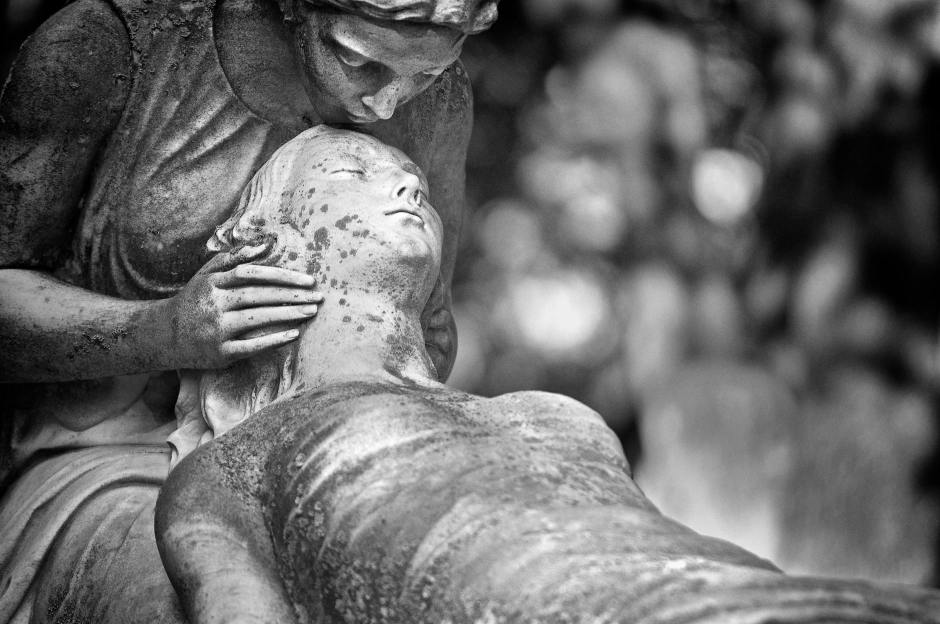
My bed is too small even for me, let alone another person—or maybe it’s just my life
that has shrunk somewhere along the way—yet when I wake up in the middle of the night,
I instinctively reach out for the warmth of another arm, knowing we’re not all that different
from mayflies.

An act of a man

What if the fate of humanity depended on a single, random act of a man,
no matter how insignificant—sort of like a Sunday parish raffle,
but with our very existence at stake?

Fairness aside, what are the chances we would survive such a trial?

Being a poet, not a statistician, I can’t really calculate the odds,
though since even on the battlefield there are occasional acts of kindness,
we might be just fine.

But if something like glueing a nail upright to a pavement slab
that I stumbled upon on my evening stroll is not an isolated incident,
then we are eternally screwed.

To be alive

Aches and pains always catch us in the act
of living, yet we still treat them as a gravely
irritating inconvenience, usually treatable
with over-the-counter remedies,
to which I can’t help but respond
with a proverb from my mother tongue:
If, after forty, you wake up in the morning
and nothing hurts, it means
you have died.

By the sea

Having lived by the sea for two decades, I can’t believe I’ve never swam in it,
and while it’s true that it is the North Sea, that’s still a poor excuse on my part,
since the locals have no problem with it, even in January—though, to be fair,
not without a wetsuit then. But perhaps more than the temperature of the water,
it’s the starkness of my exposed inadequacy that scares me. After all, I’m nothing
but the sum of past abasements.

In pursuit of the reader

Even the smallest gap in the curtains
might find its peeping Tom—so there is always hope
for the closet poet—yet finding readers proves no easy feat
for the wordsmith in disguise, who has learnt the difference
between epistemology and epistolography
but has never managed to navigate
the intricacies of the modern sock drawer
(as he sees the algorithm-driven blogosphere realm).

Perhaps a premature demise is the answer,
although it only works when real,
as we know from Ms. Meachen’s story.
Besides, the fame gained in this way
is of no consequence to the person concerned,
regardless of whether there is life after death or not.
After all, there is no fun in bidding against others
when the only currency you have is the obol.

An apocalypse of a sort

The end of the world starts small—it could be a handful of dried goji berries
or marginalia left by the previous reader of the ‘Homo Faber’ you just bought
at a stall—yet apocalyptic eschatology focusses on a grand finale of a sort,
even though the whole world comes down to a few stanzas on a tarnished page
trapped in the typewriter perched on a battered desk in your attic studio.

True magic

Any sufficiently advanced technology is indistinguishable from magic,
says Clarke’s third law, yet it doesn’t feel particularly magical
when you’re trapped in a narrow tunnel, following pre-recorded instructions
played at you over and over again:
breathe in;
breathe out;
hold your breath;
resume breathing.

Perhaps it’s the emphasis placed on the word ‘sufficiently.’
After all, you are a child of the age of electronic gadgets,
so it takes more than half an hour of creaks and crackles
to make an impression on you. If anything, that bulky cube
with the narrow table sliding into the tunnel at its centre feels dated
compared to the latest smartphone glued to your hand,
and as an educated individual, you have a pretty good idea how it works.
Or maybe it’s a matter of definition, since ‘magic’ is still part of your vocabulary
but reserved for fireworks displays and first-date ambiance.

Whatever the reason, you might need some true magic
to escape the results of this scan.